
SMOKE & MIRRORS
It has now been eight years since the fire at Grenfell Tower on the night of June 14, 2017. The fire, which began in a kitchen on the fourth floor, rapidly engulfed the building, spreading via highly flammable cladding that should never have been used. The materials were not only unfit for purpose but had been installed in clear violation of existing safety regulations. These decisions were not isolated mistakes. They were the result of coordinated actions—an ongoing pattern of collusion between private building firms, suppliers, and the local authority. Together, these groups ignored repeated warnings and prioritised cost savings, reputation management, and procurement targets over human life.
What happened at Grenfell was not an unforeseeable accident. It was a preventable disaster brought about by institutional failure and corporate self-interest. The loss of 72 lives and the impact on hundreds more—families, neighbours, and communities—was the direct outcome of a broken system in which accountability was consistently avoided and responsibility diluted.
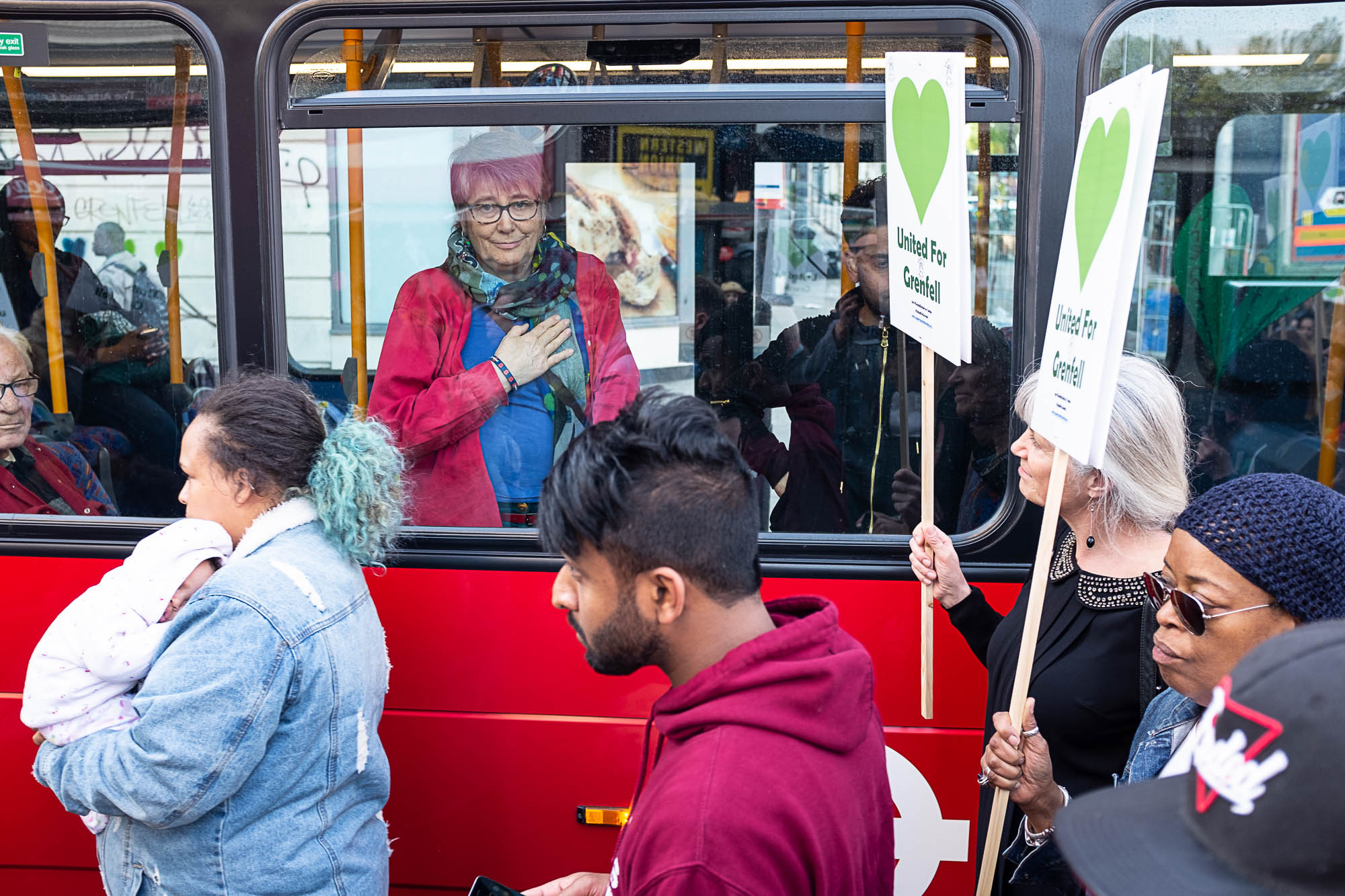
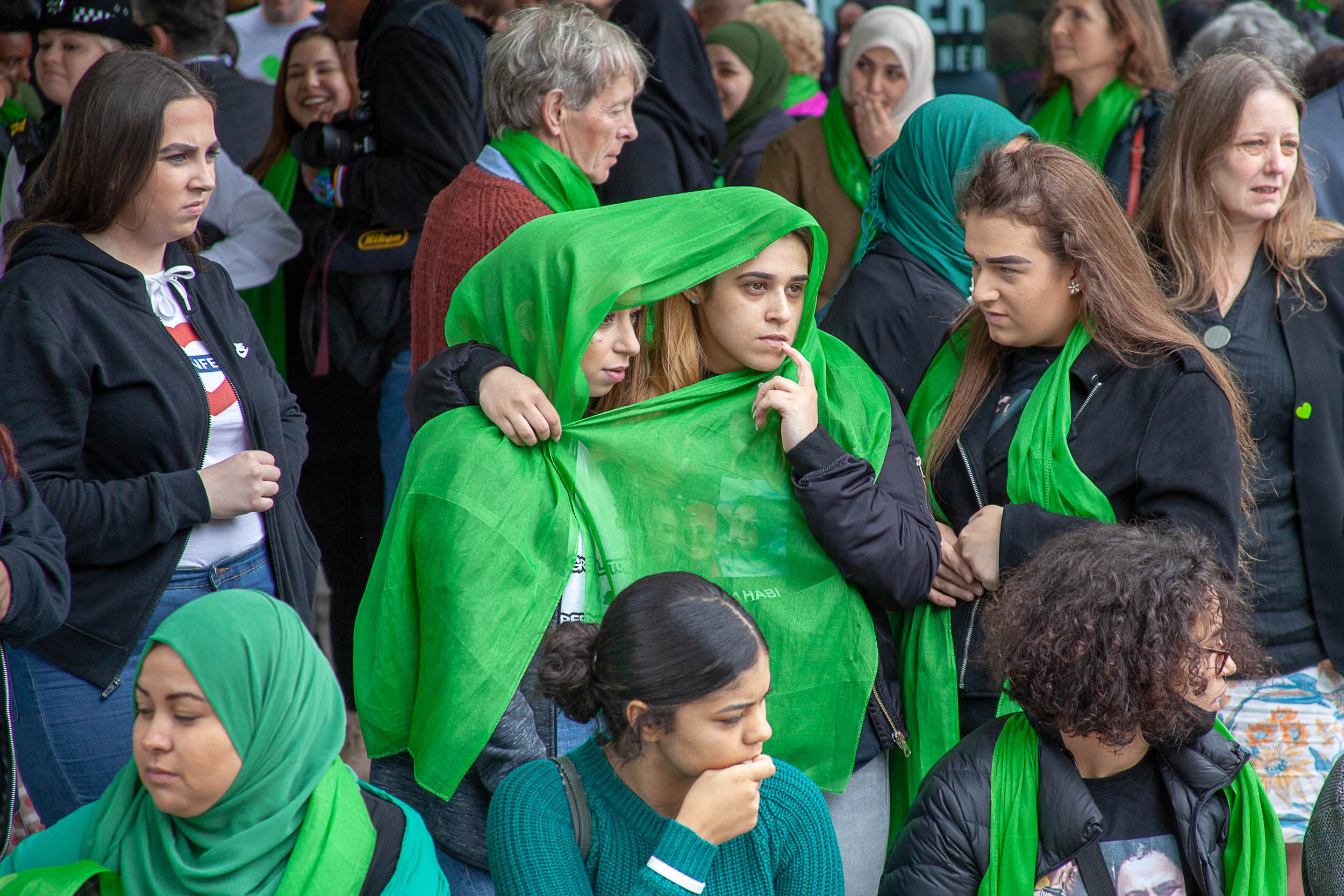
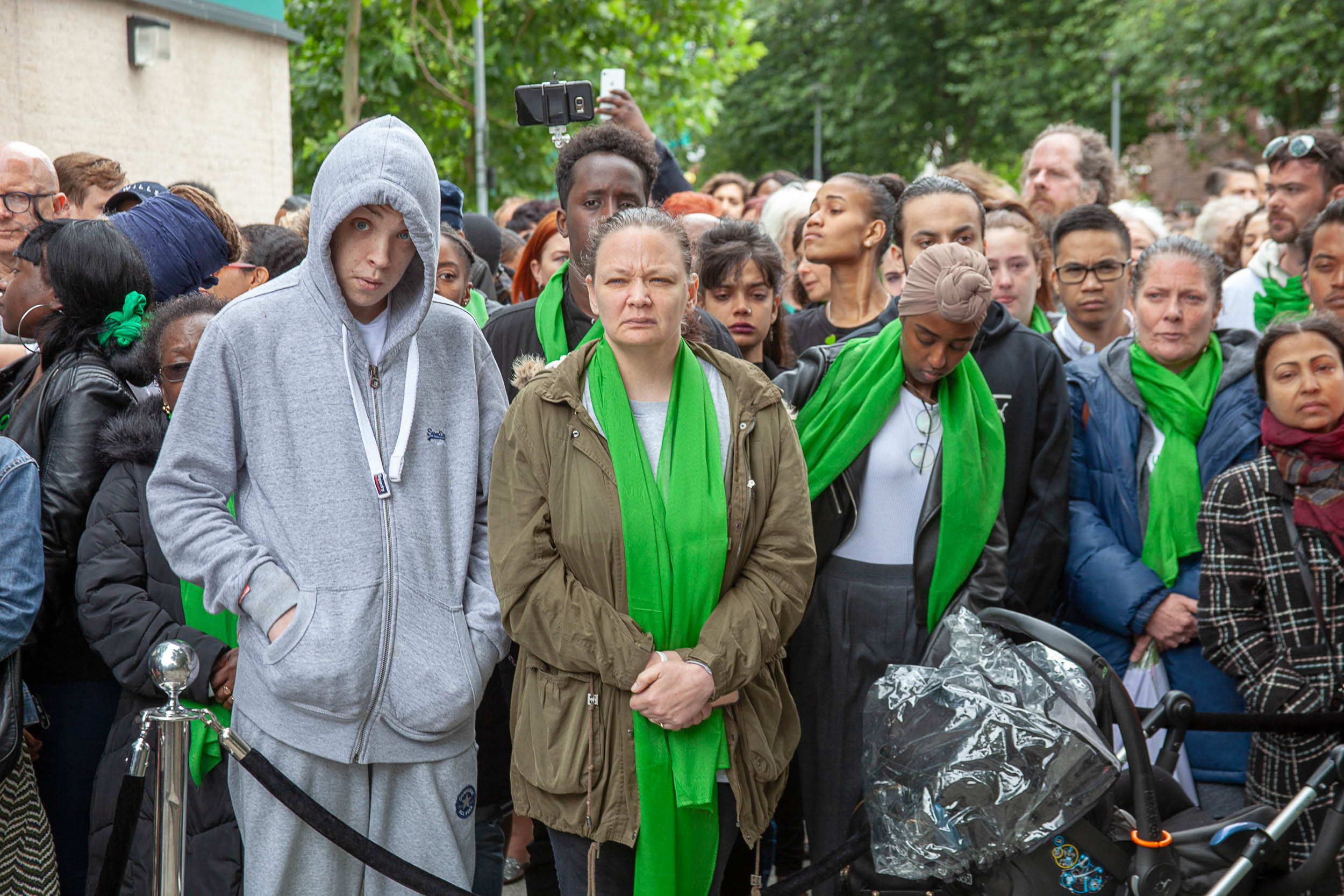
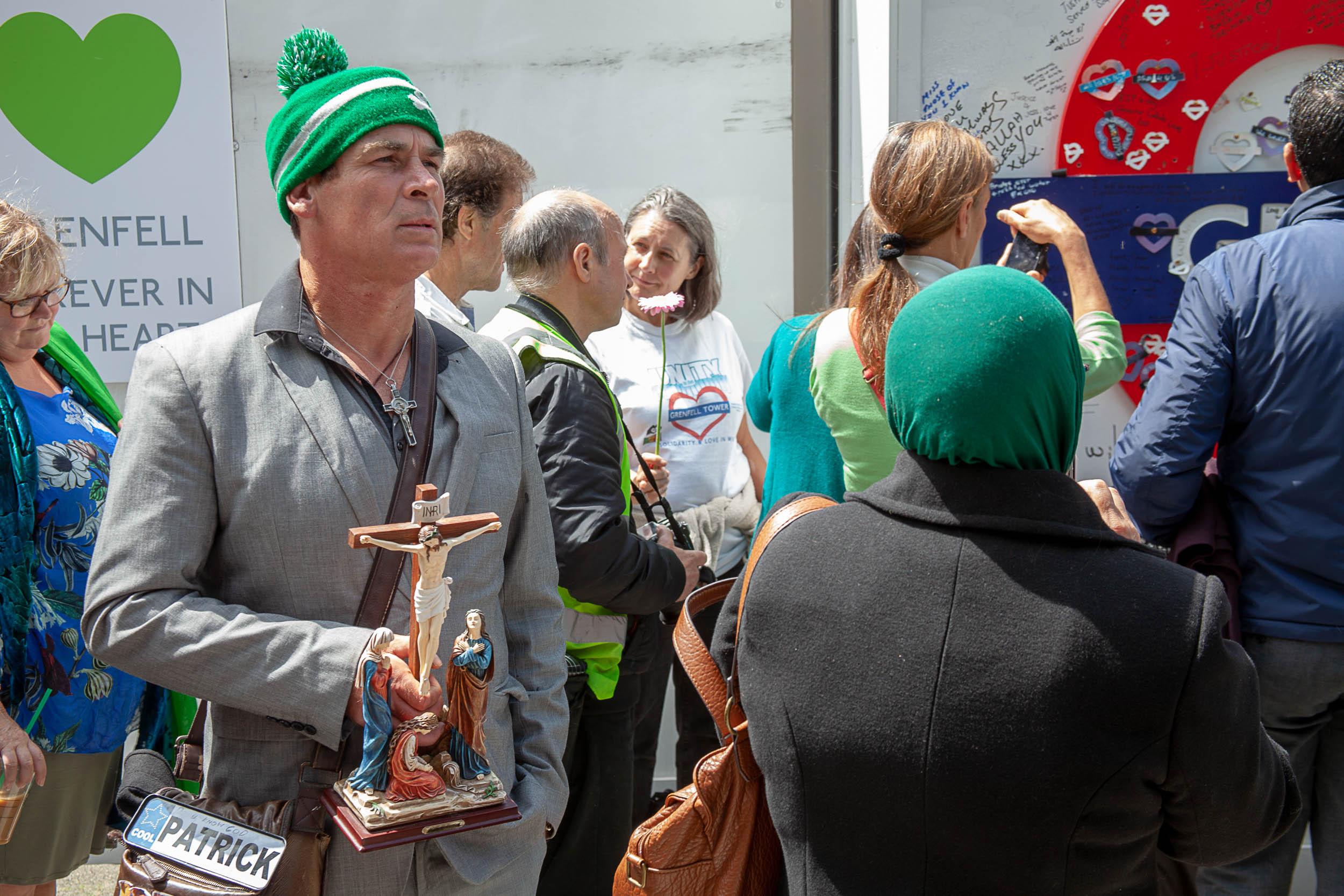
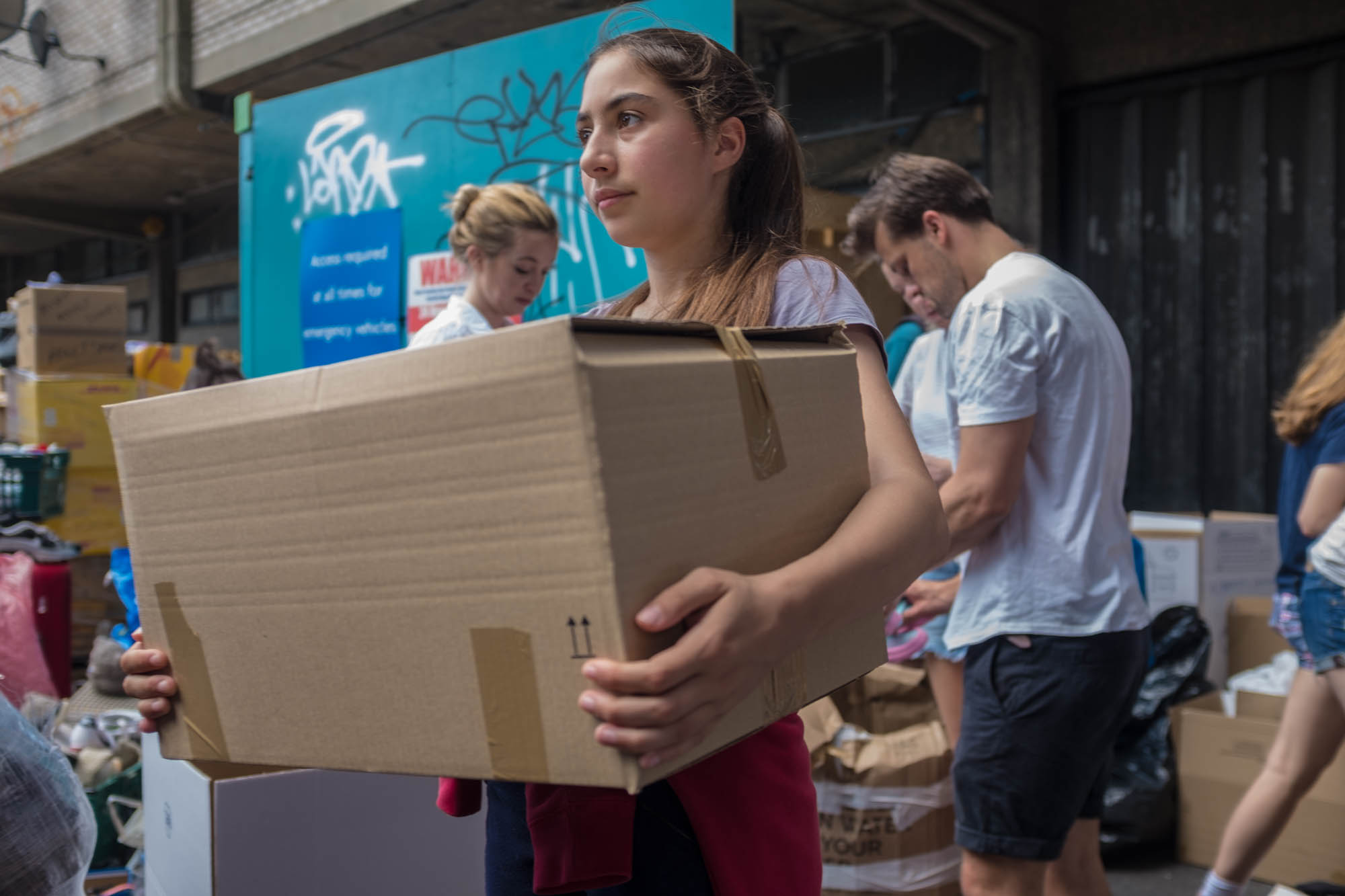
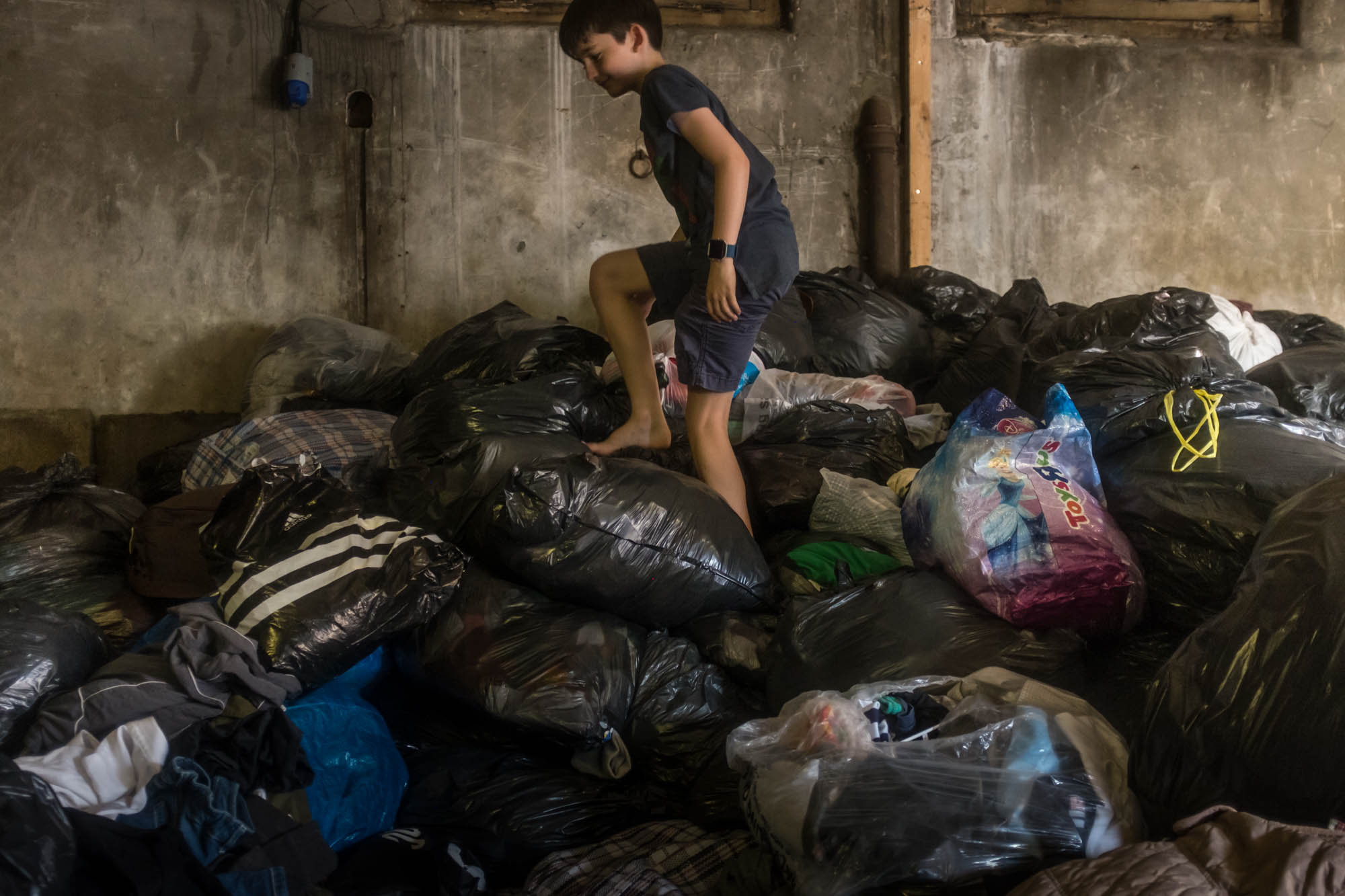
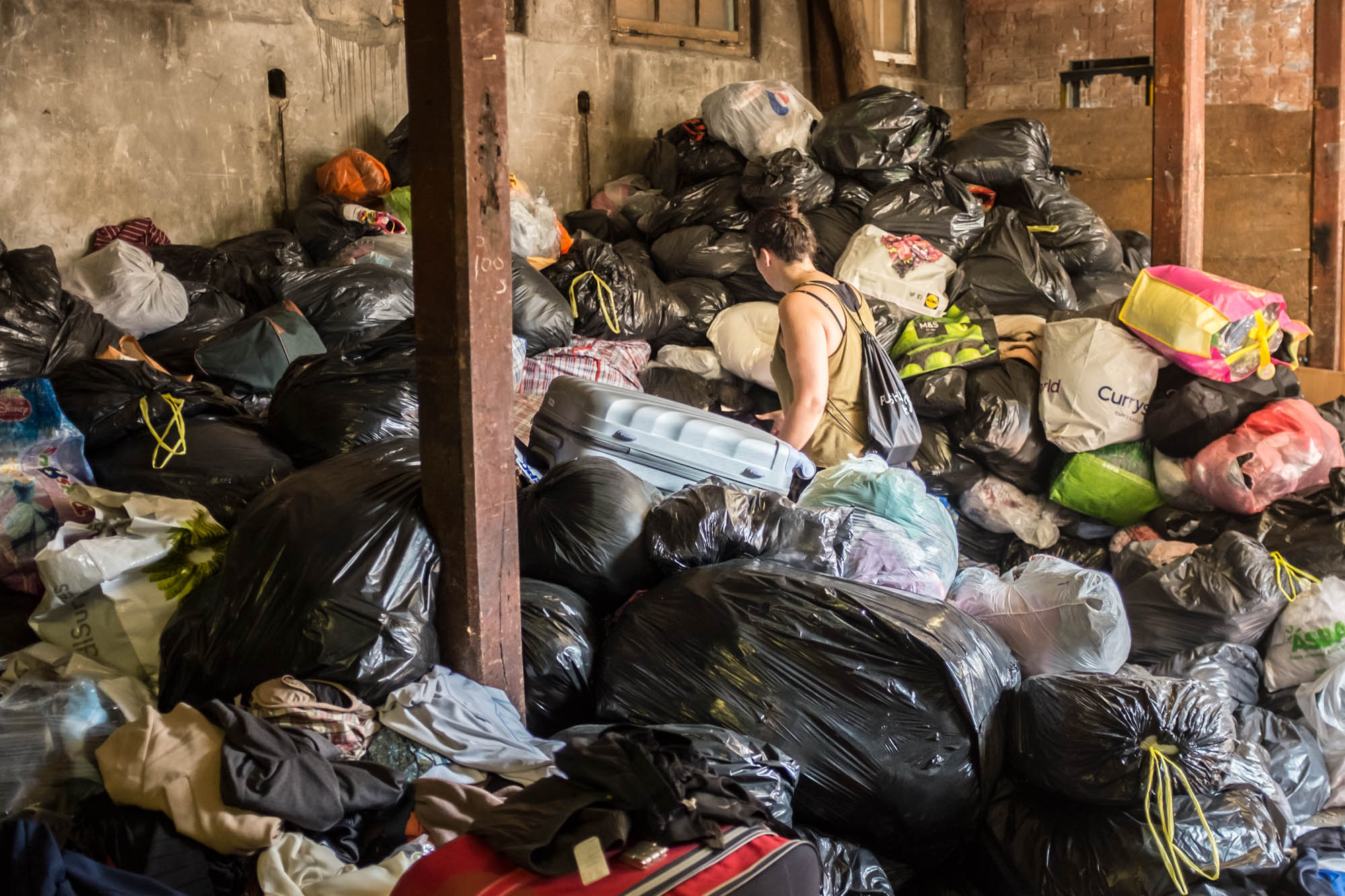
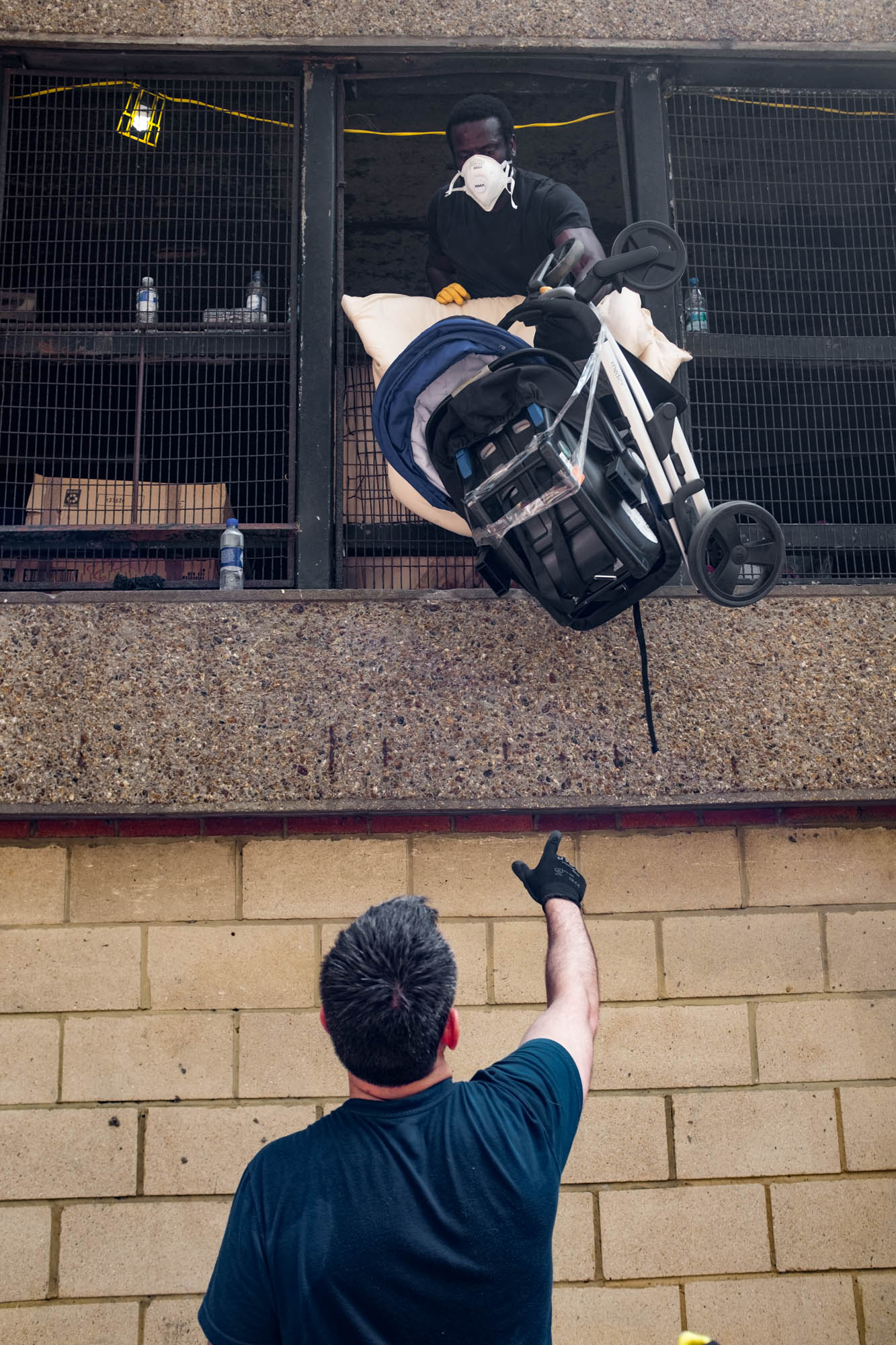
For the past years, I have been photographing the aftermath of the fire, engaging with the community around Grenfell, and bearing witness to the sustained activism, grief, and collective strength shown by those most affected. This work comes from a place of proximity—both emotional and geographical. I live only a few hundred metres from the tower. The community’s ongoing campaign for justice is not abstract to me; it is something I have seen and felt, something that continues to shape our daily lives.
The official public hearings of the Grenfell Tower Inquiry have concluded, and the panel is now in the process of writing its final report. But for many survivors and bereaved families, there is a sense of growing frustration. The process has been long, opaque, and difficult to trust. People are tired of waiting. Tired of promises that go nowhere. Tired of seeing institutions deflect responsibility.
As an artist, I use photography and related materials to explore ideas of neighbourhood, belonging, and how policy decisions filter into people’s everyday lives. I’m interested in what happens when communities are subjected to long-term neglect, when safety becomes a matter of postcode, and when profit is placed above care. In documenting Grenfell, I am not trying to offer answers, but rather to raise questions that shouldn’t go away.
The tower, still wrapped in white plastic, remains a stark presence in our landscape—a visible symbol of institutional failure. It stands in one of the wealthiest boroughs in the country, yet it tells a story of inequality, injustice, and the enduring consequences of political and corporate negligence. The people affected by this disaster continue to live with its aftermath. They continue to demand change. The challenge is to ensure that the conditions that allowed this to happen are not quietly repeated elsewhere. Justice must mean more than words—it must lead to accountability and meaningful change.
See link below for further work exploring the digital footprint of the Tower on Google Earth as its physical structure is taken down; ‘All That Remains’ engages with this tension, mapping a fractured and quietly haunted landscape in which memory, absence, and digital residue overlap.
All That Remains ArchivePOLAROIDS
In the immediate aftermath of the fire, I found myself unable to photograph the burned-out building. It felt intrusive—disrespectful, even—and reduced something profoundly human to a spectacle.
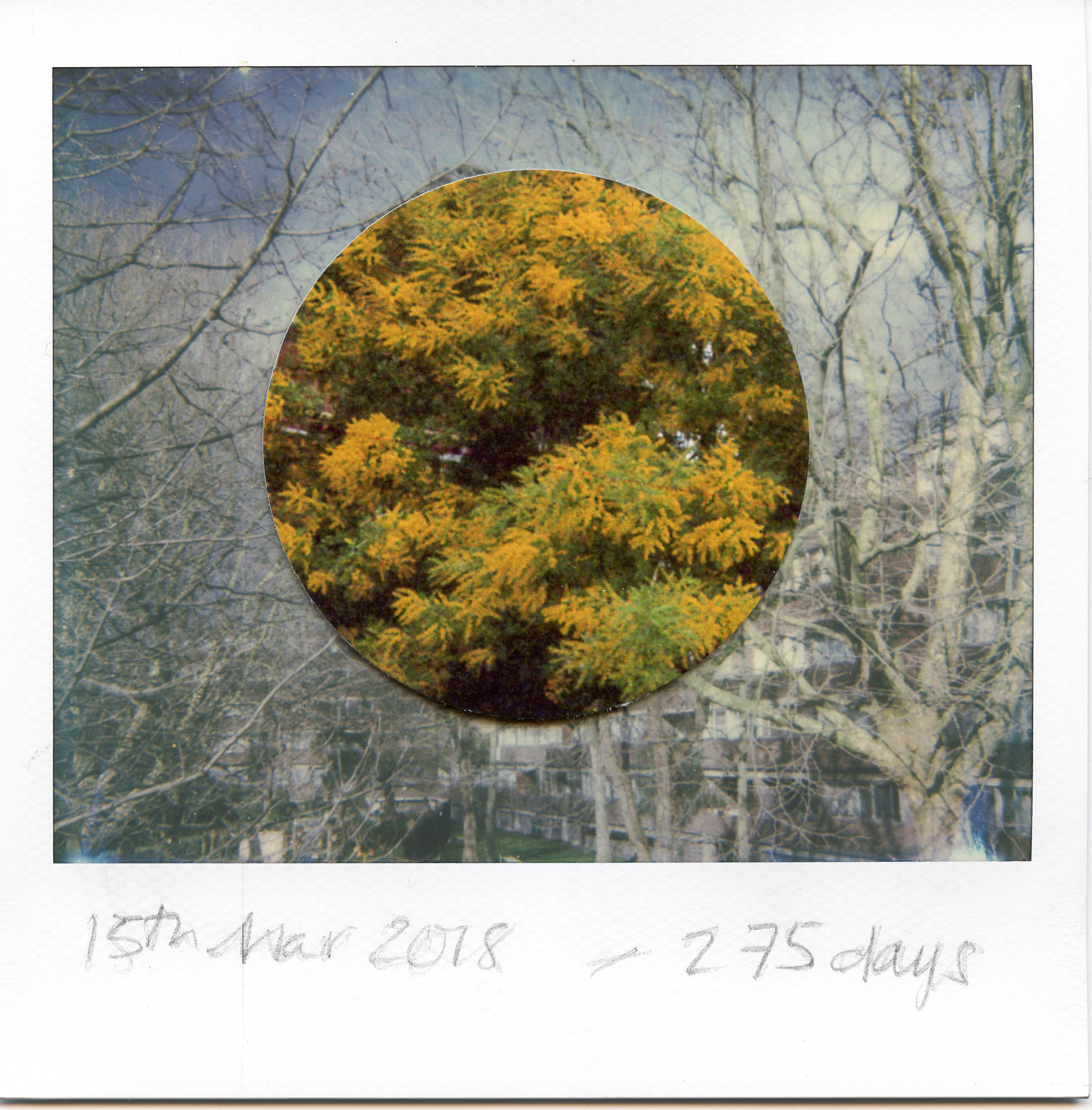
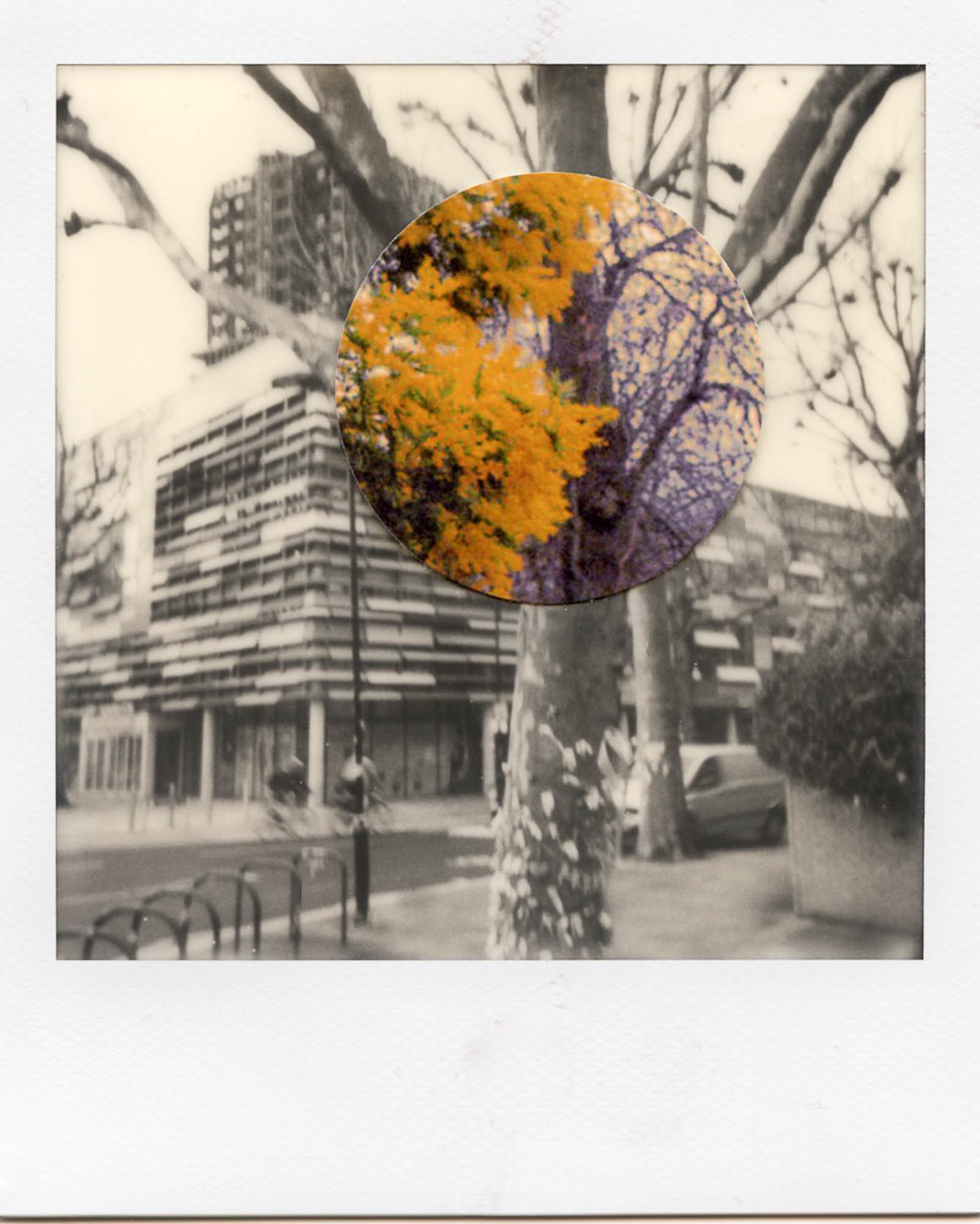
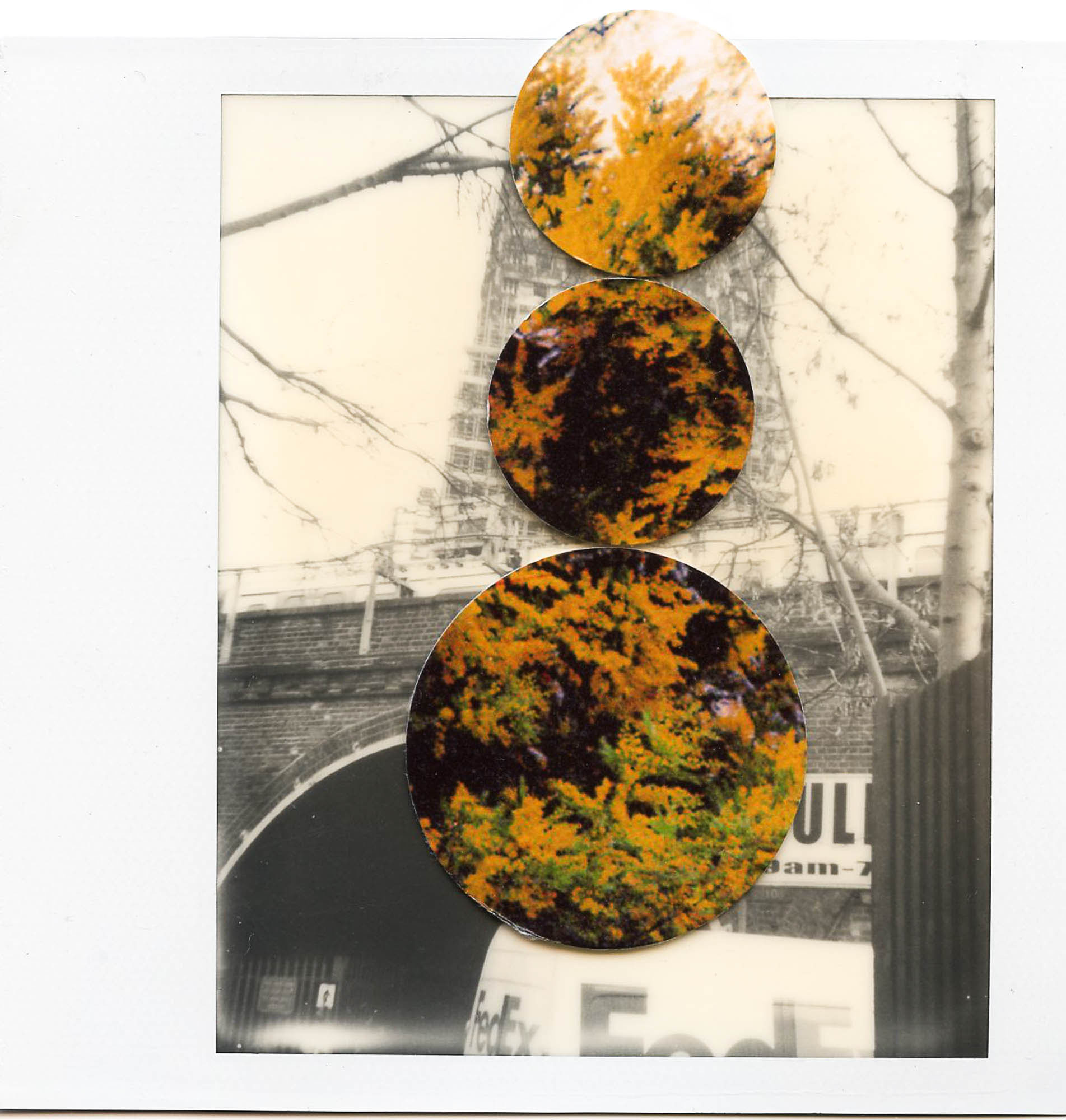
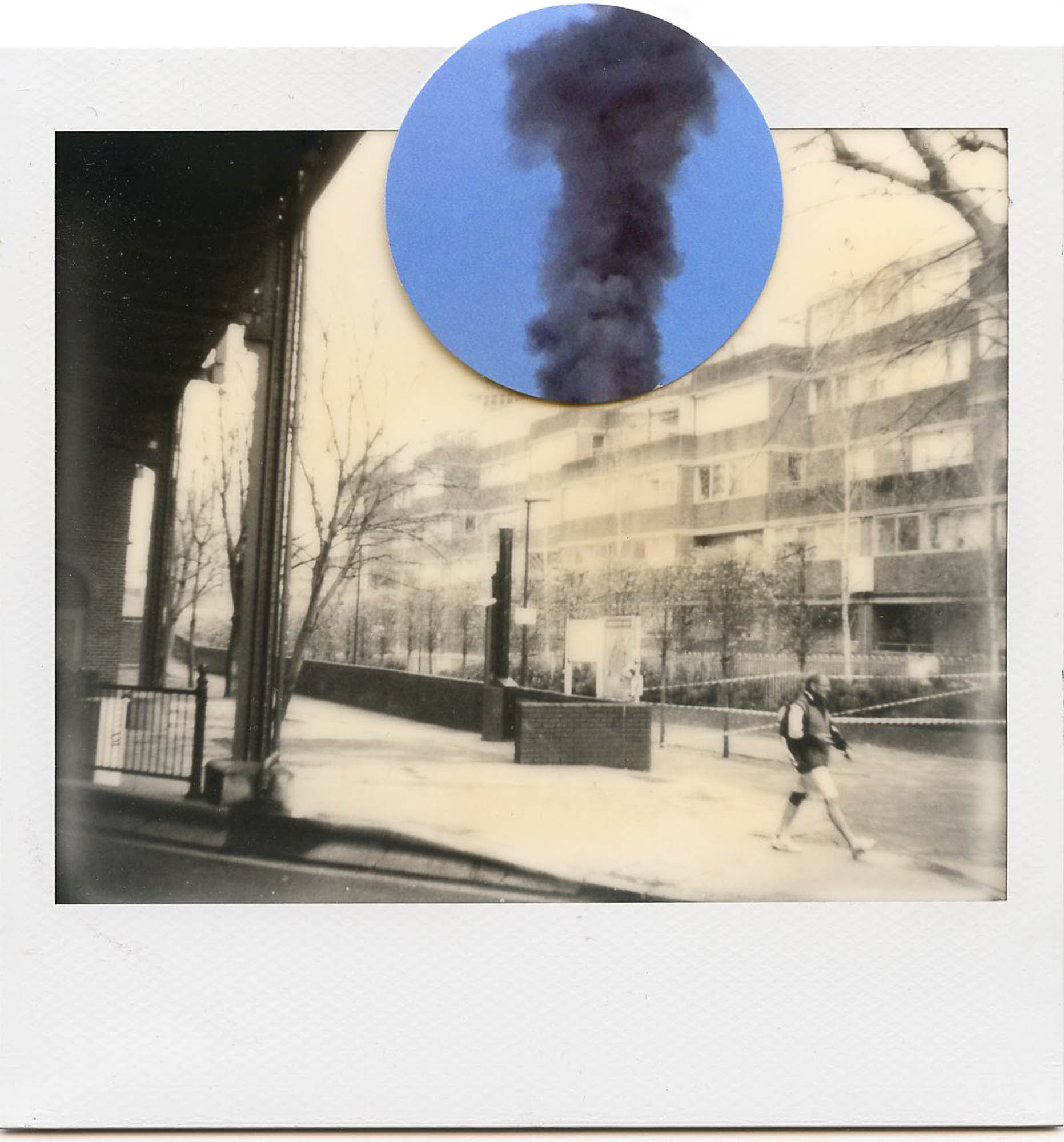
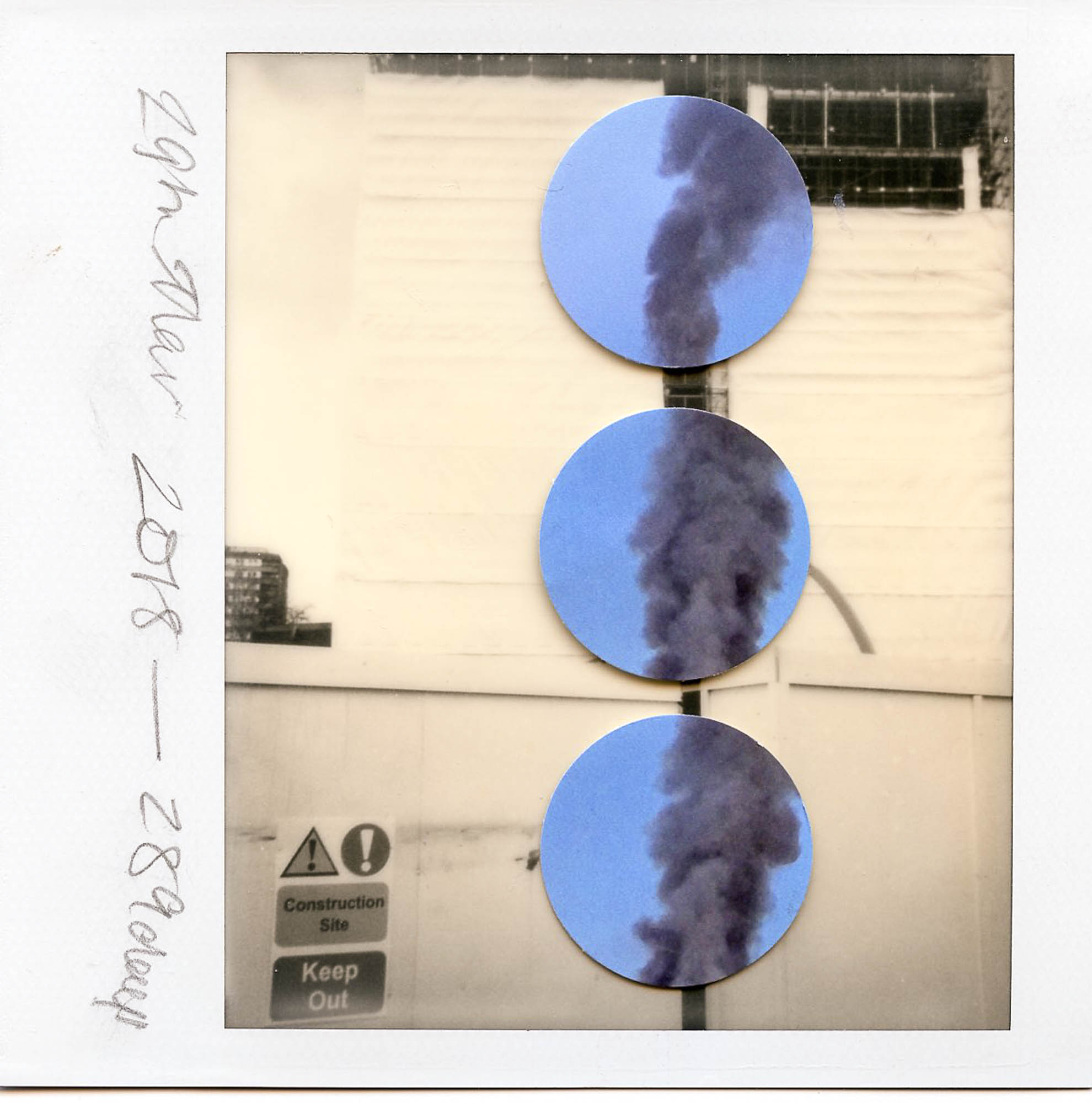
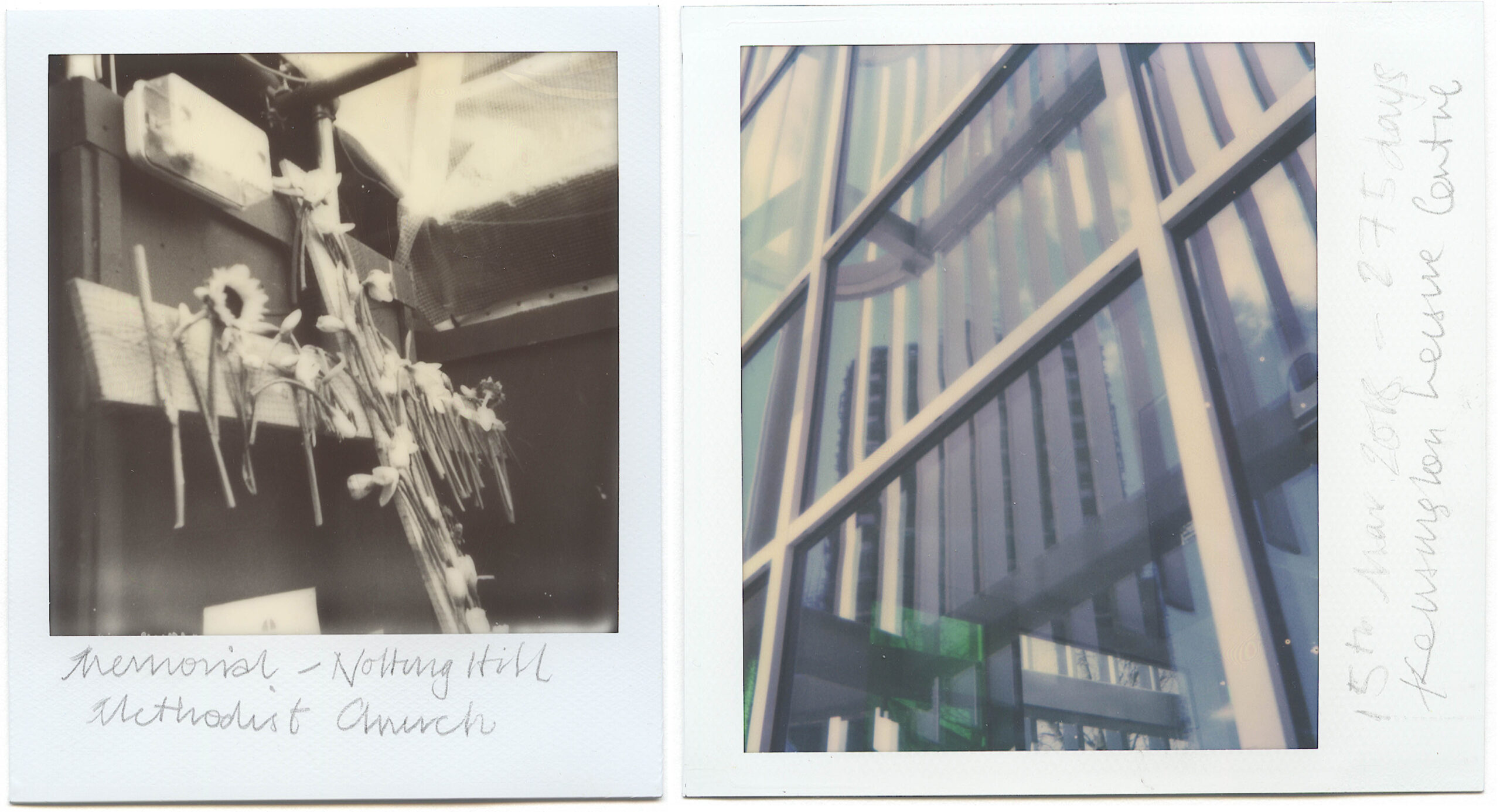
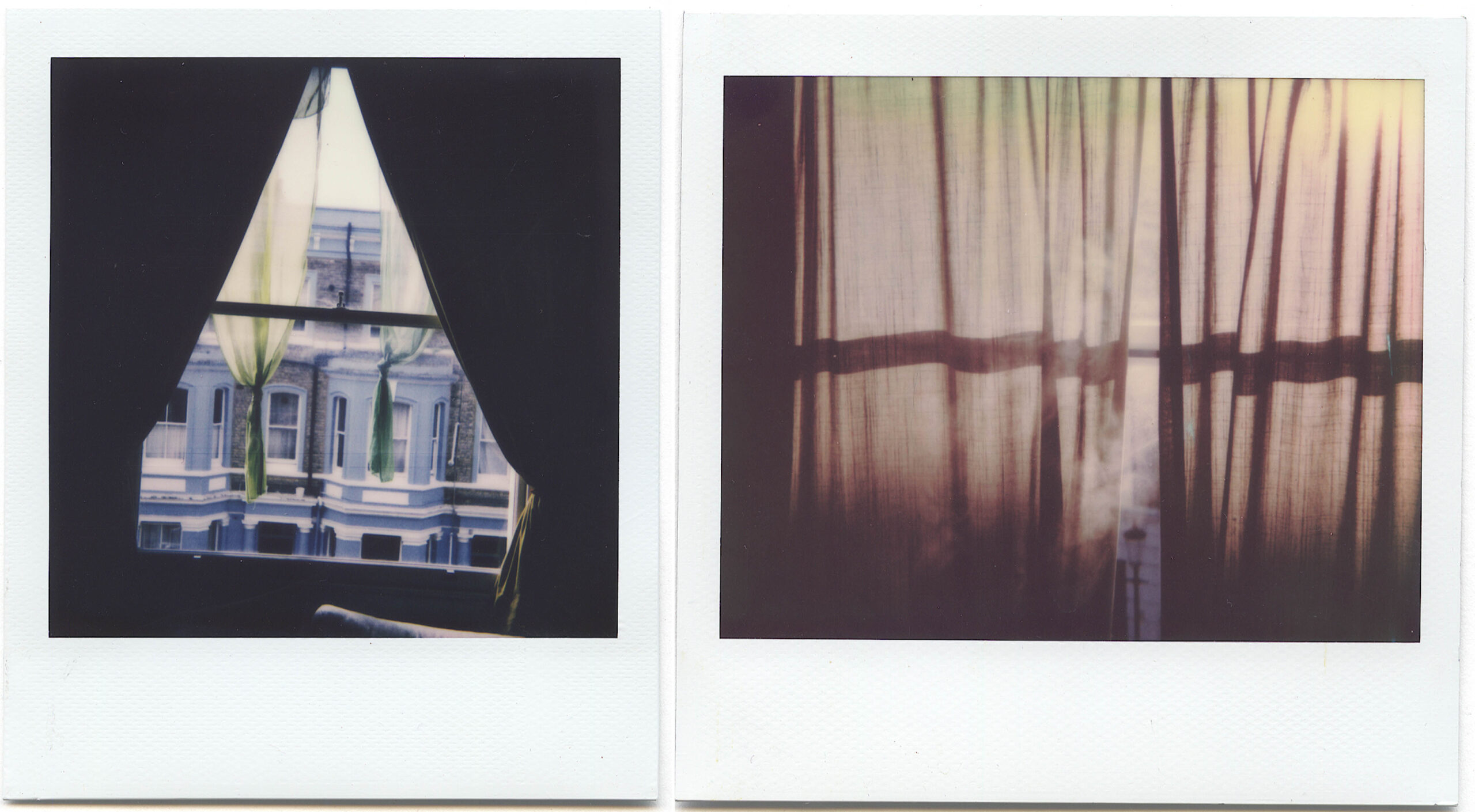
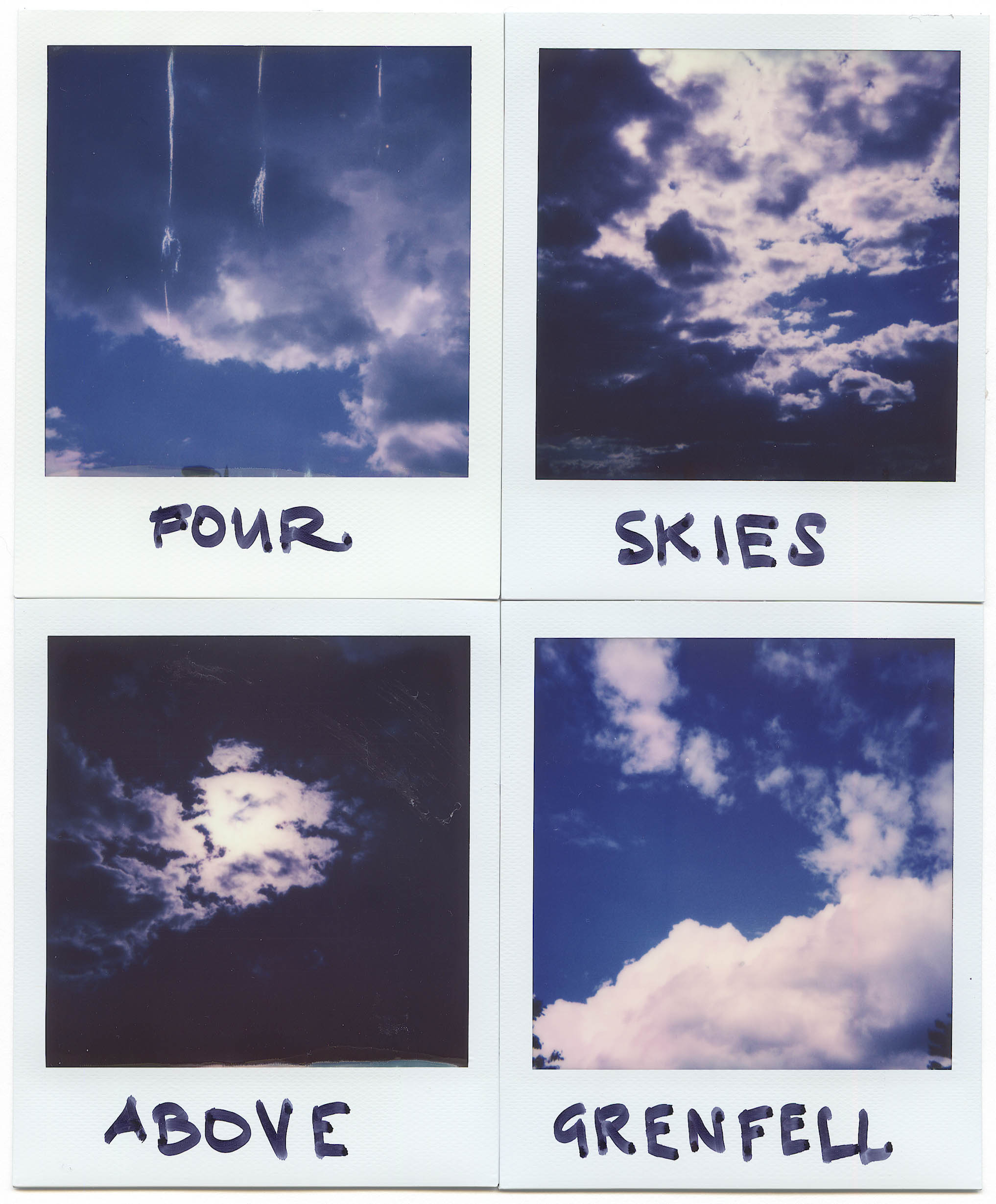
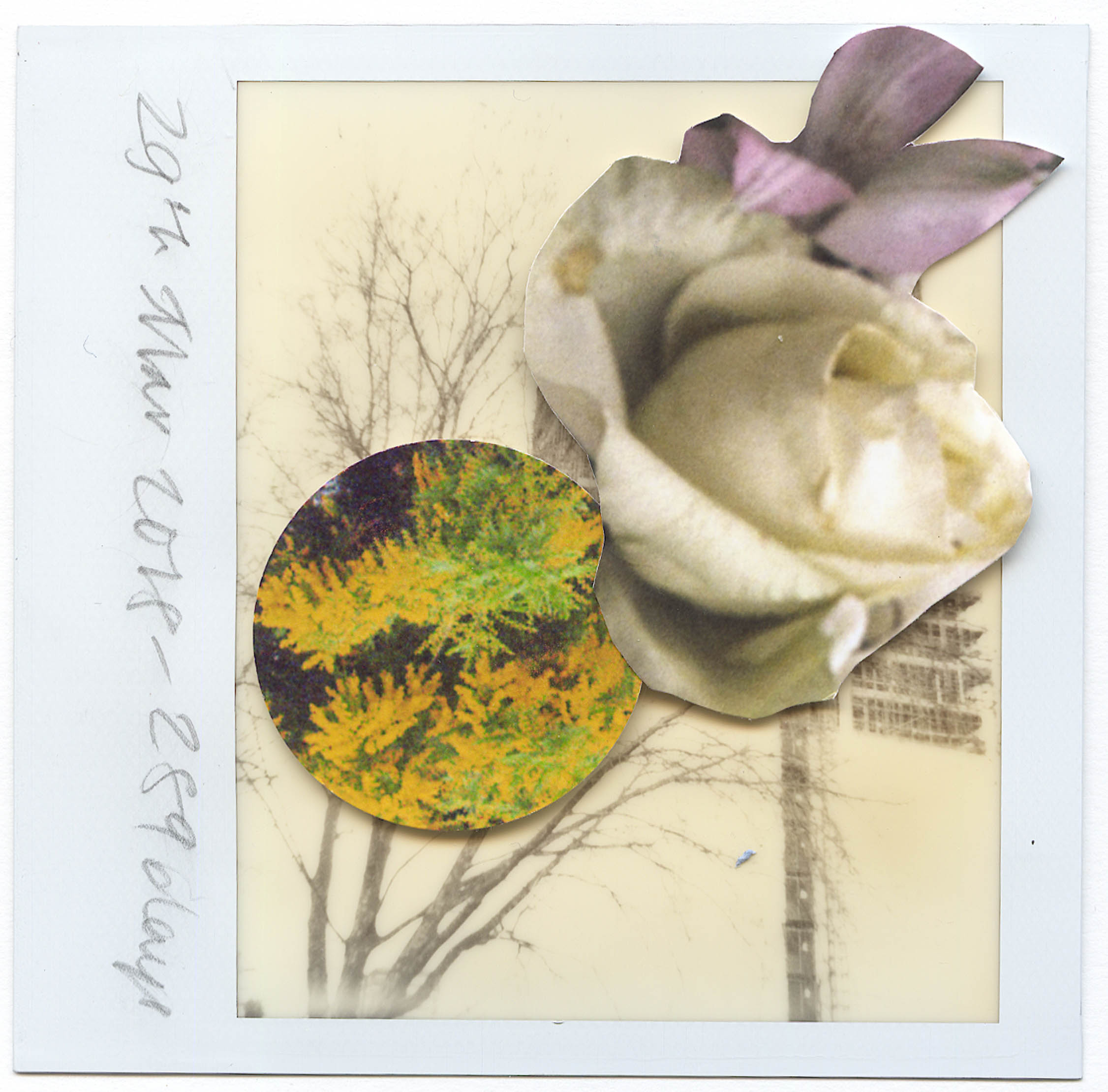
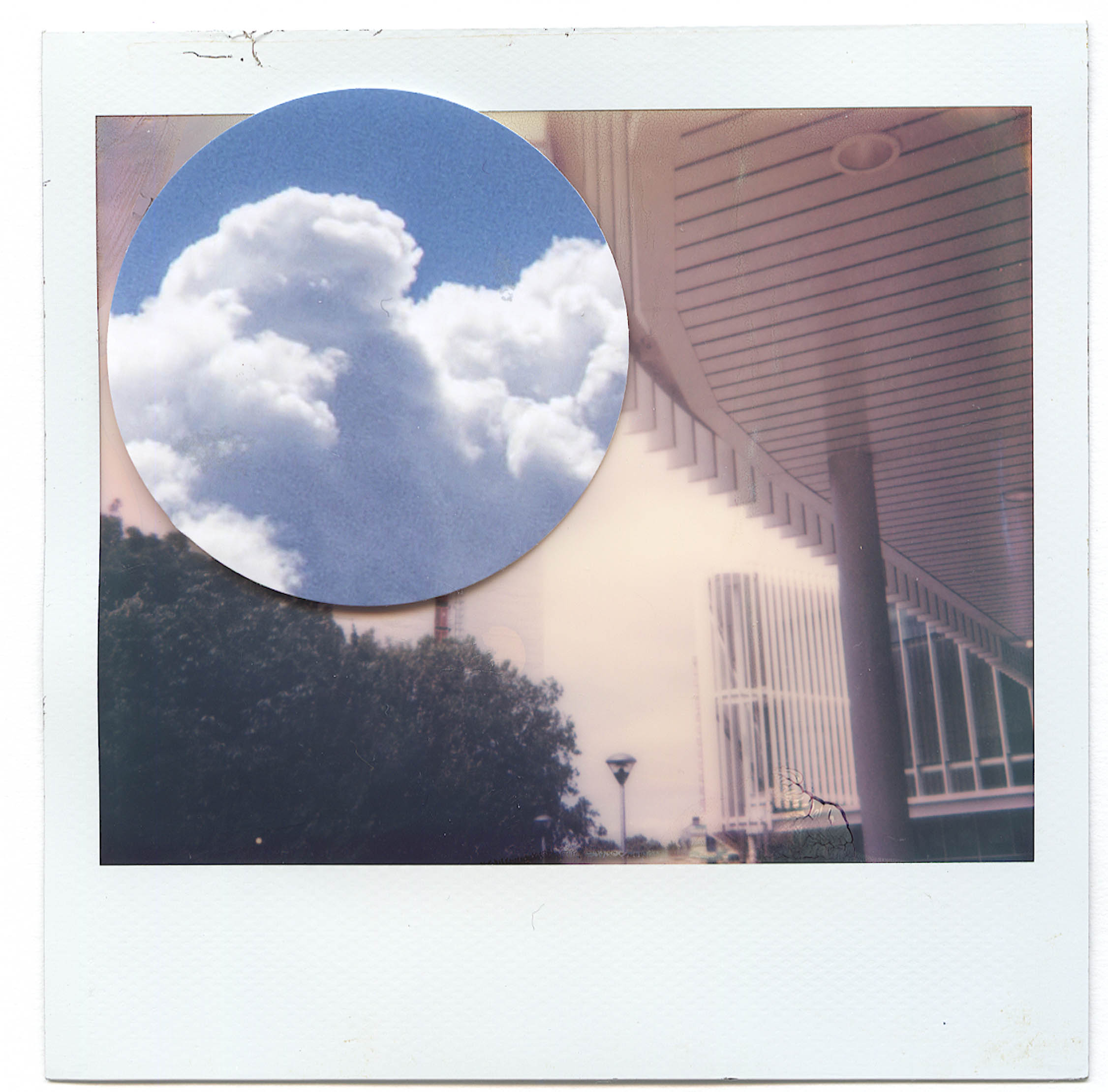
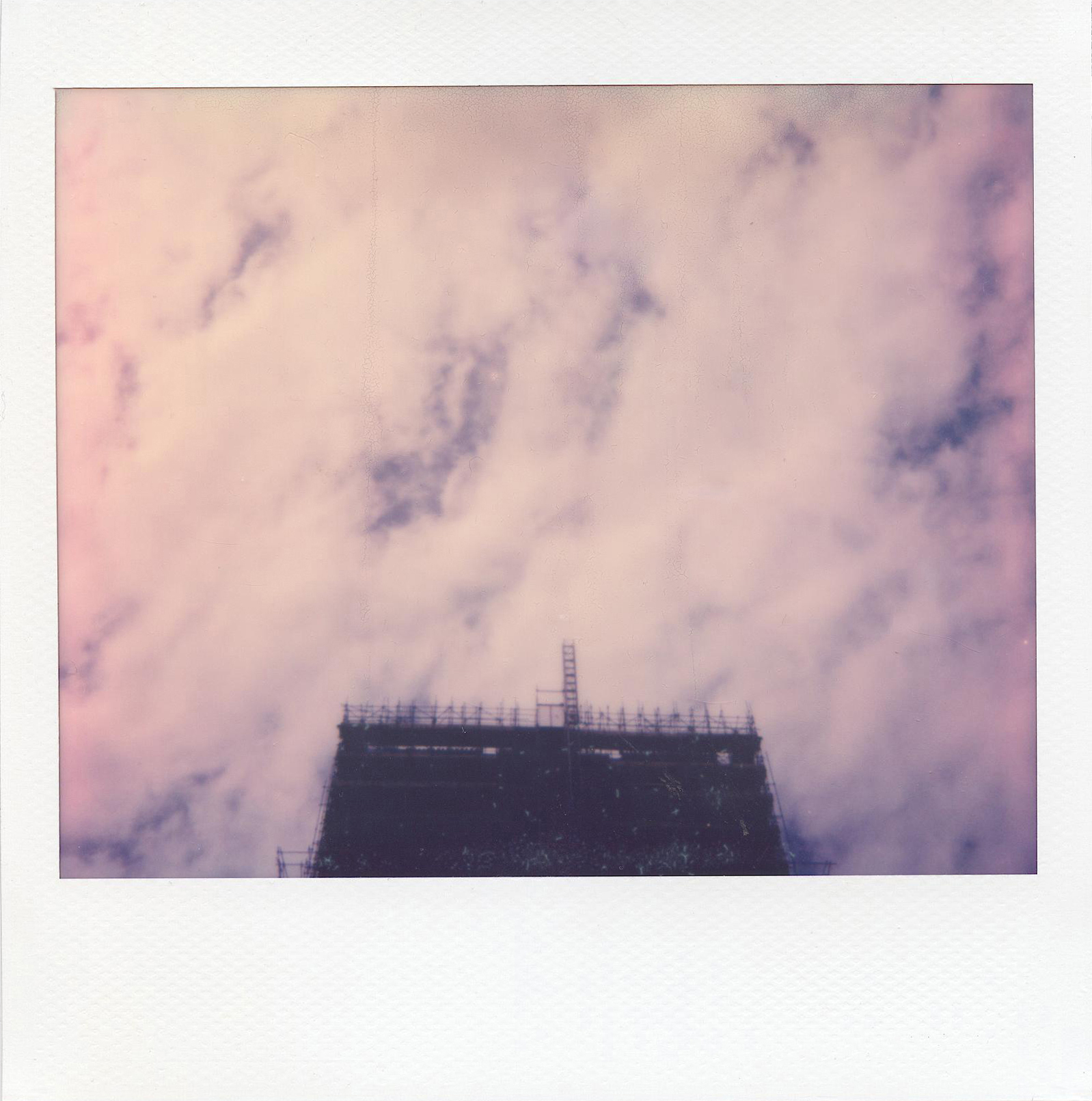
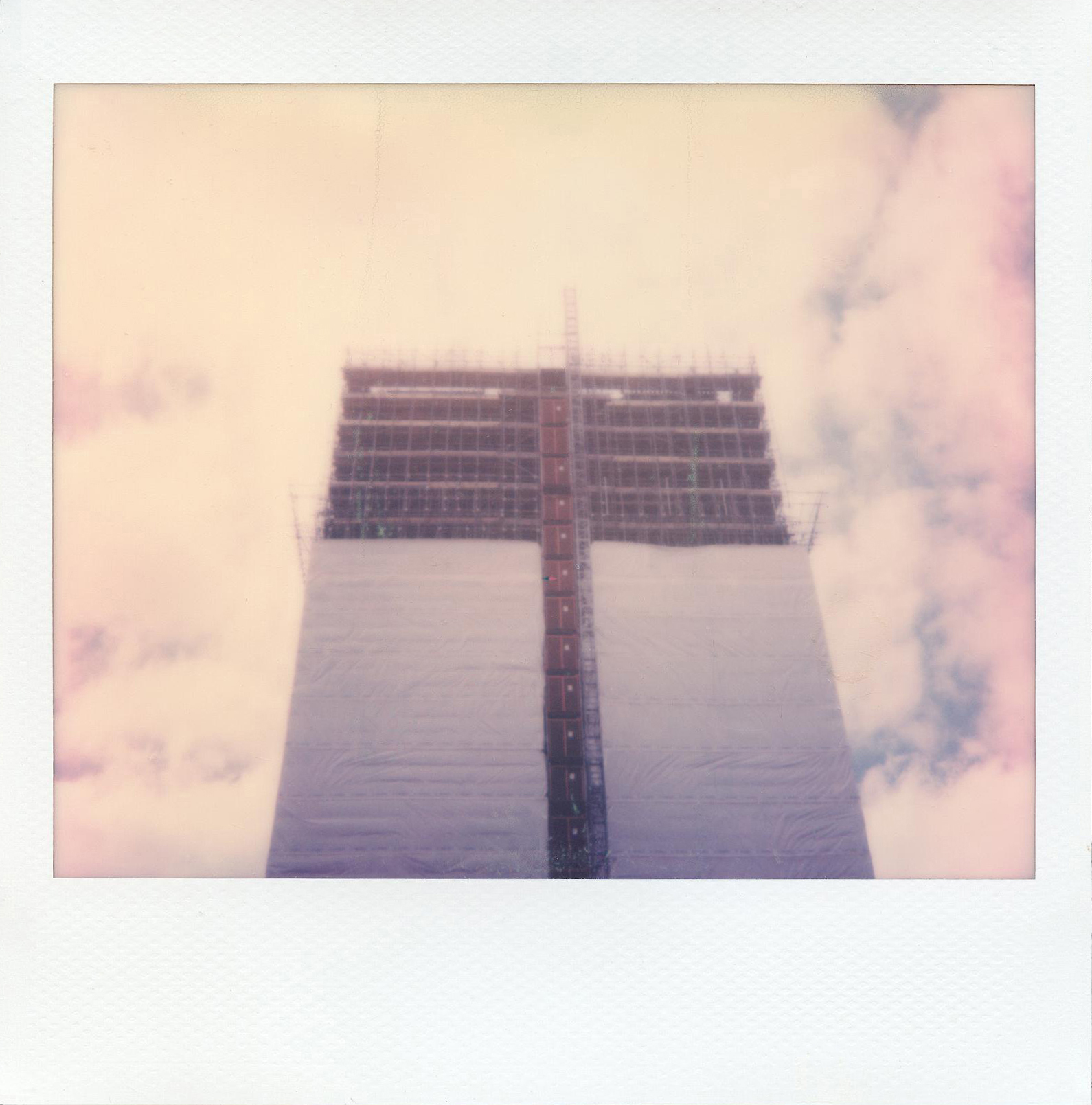
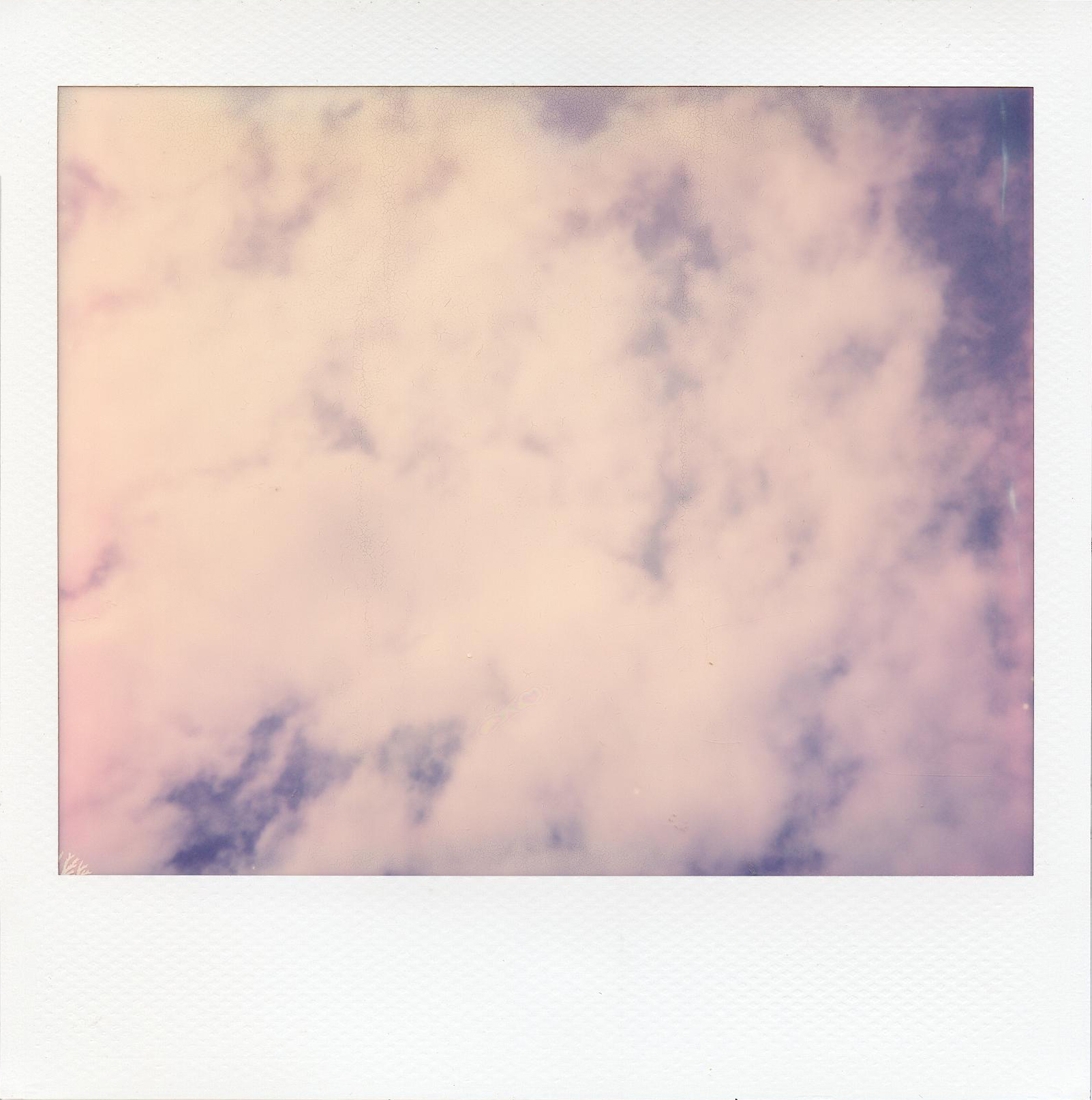
Only after a considerable period did I begin to make images that moved beyond straightforward reportage. This work forms part of an early series of Polaroids, where I became interested in the medium’s historical role within police documentation.
Polaroid cameras were frequently used at crime scenes to record evidence: the position of objects, the condition of spaces, the quiet details that might later be scrutinised in court
Their images carried an implicit authority—treated as neutral, factual records, and often submitted as visual proof within legal proceedings.
That association lingers. The Polaroid image still holds a kind of evidential weight, even as its surface resists clarity. There is a tension between its status as “truthful” documentation and its material instability—its soft focus, chemical shifts, and tendency toward ambiguity. In this way, the images feel less like precise records and more like impressions, as though they absorb the atmosphere of a scene rather than simply describing it.
Polaroids also possess a distinct temporal quality. They seem to hold time within them—fixed, yet unsettled—emerging slowly, as if reluctant to fully disclose what they contain. Though produced in minutes, they carry a sense of delay, of something withheld. Like unanswered questions, they conceal as much as they reveal.
In these images, I photographed the tower from a distance, partially obscuring it with a disc of flowers or clouds—forms suggestive of cycles, of passing time, and of possible renewal. The gesture interrupts the act of looking, complicating the idea of the photograph as evidence, and instead invites a more reflective, uncertain engagement with what is seen—and what remains just out of reach
GRAPHICS & WORKS ON PAPER
 Digital Print on ACM Cladding. 2021 | 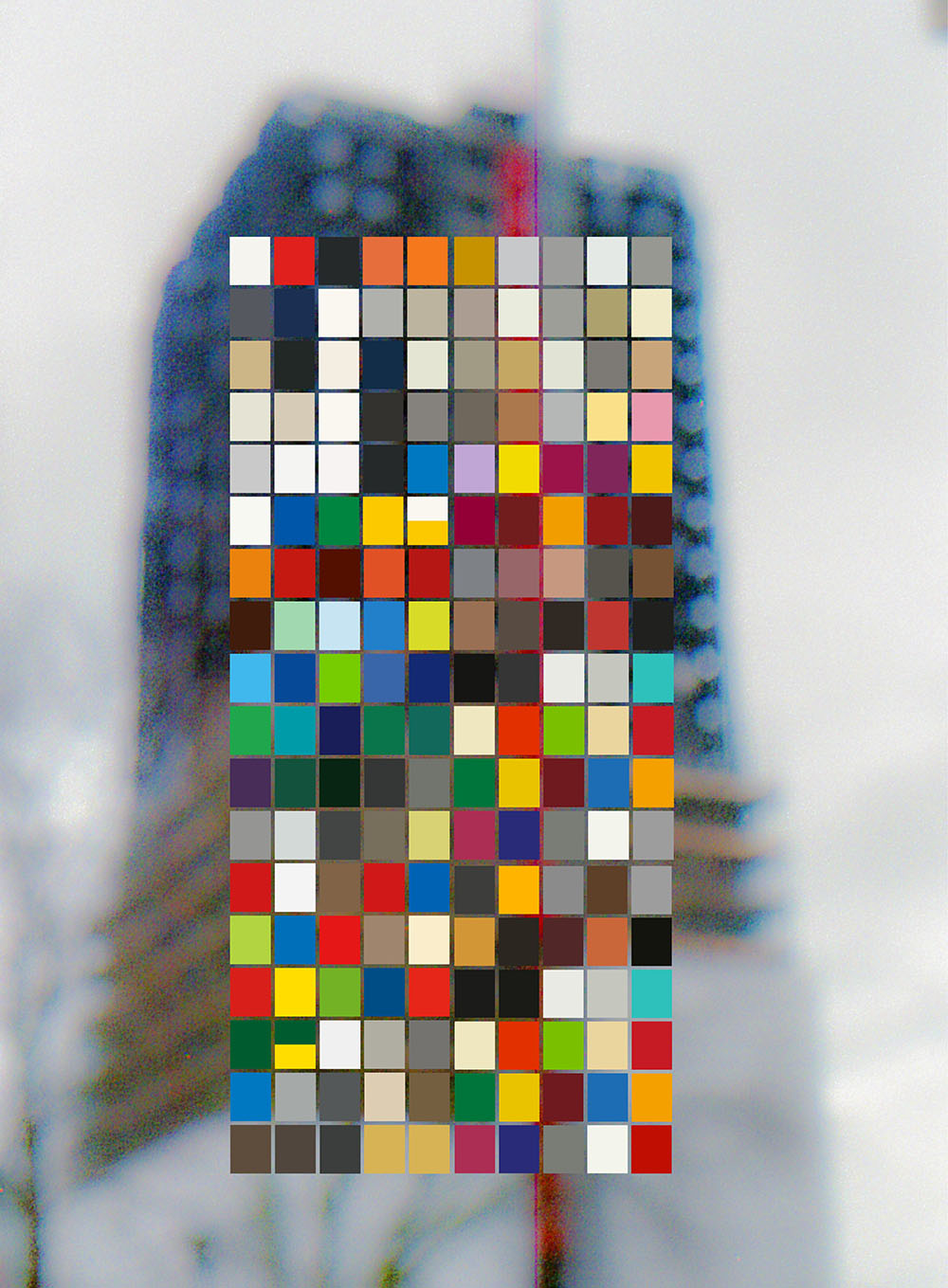 ACM Cladding Colours still available to buy on Arconic's website |  'Evidence' Digital print on Brown Paper Tags. | 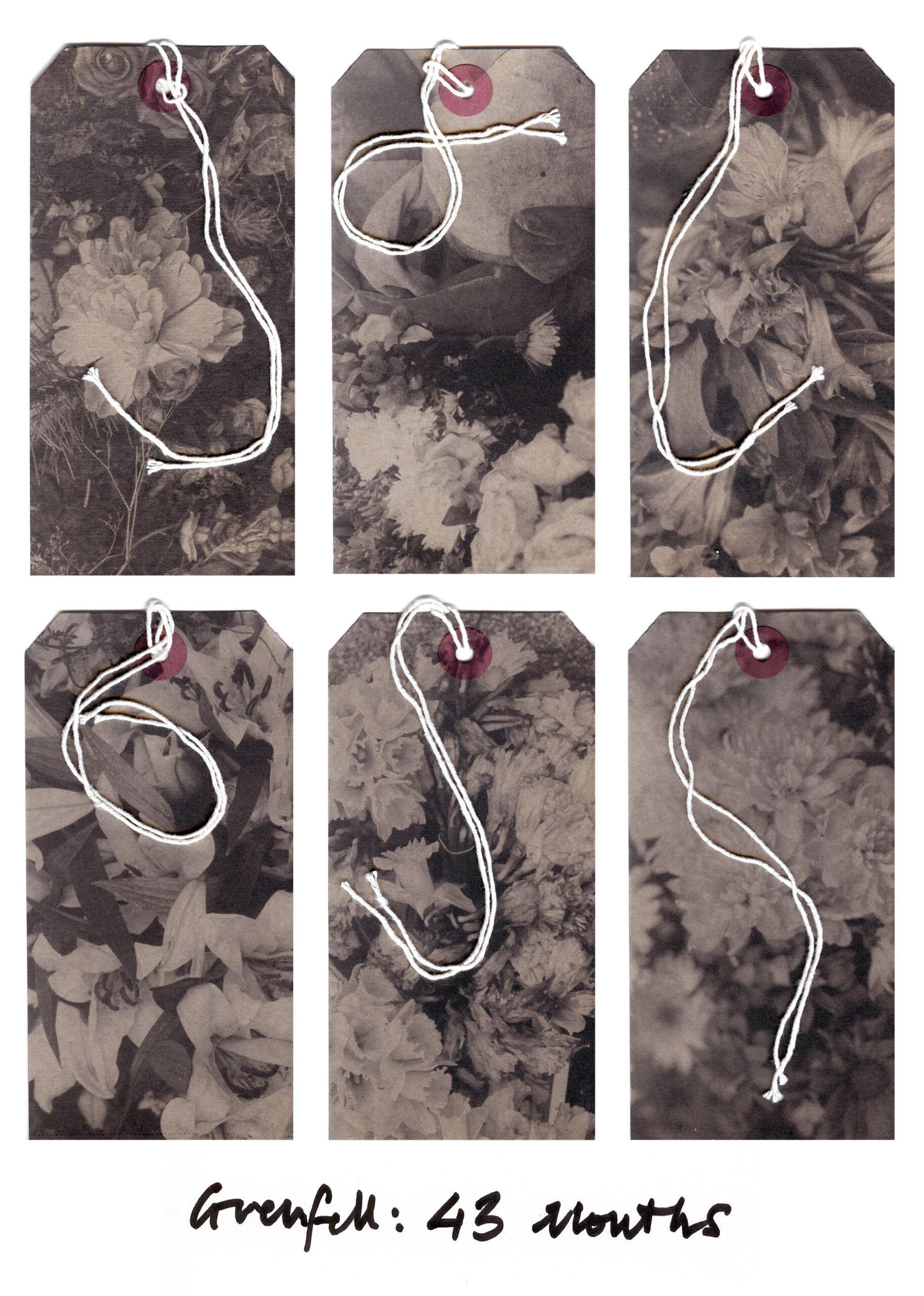 'Evidence' Digital print on Brown Paper Tags. |  | 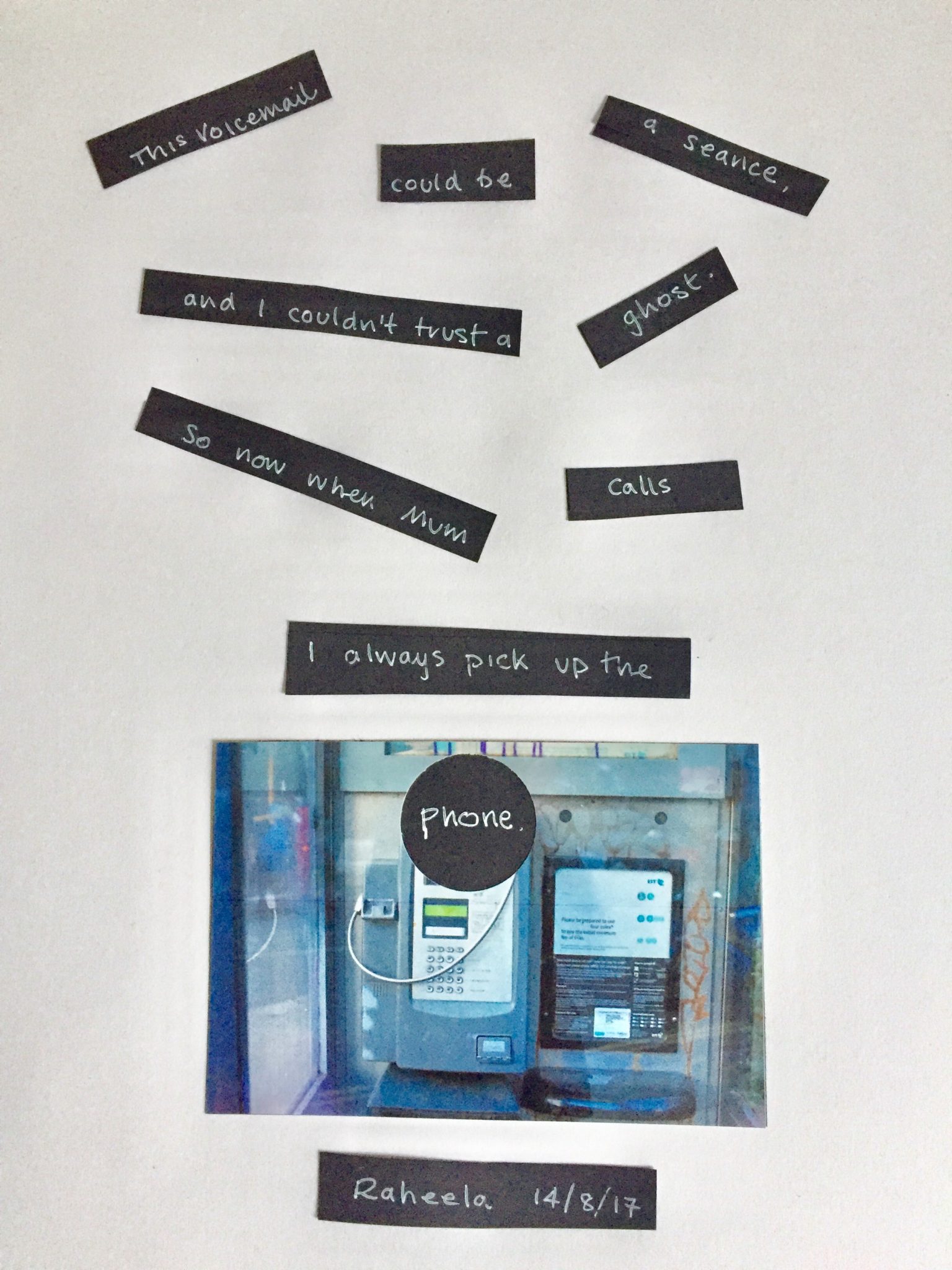 'I ALWAYS PICK UP THE PHONE' - Testimony. Collage 2019 | 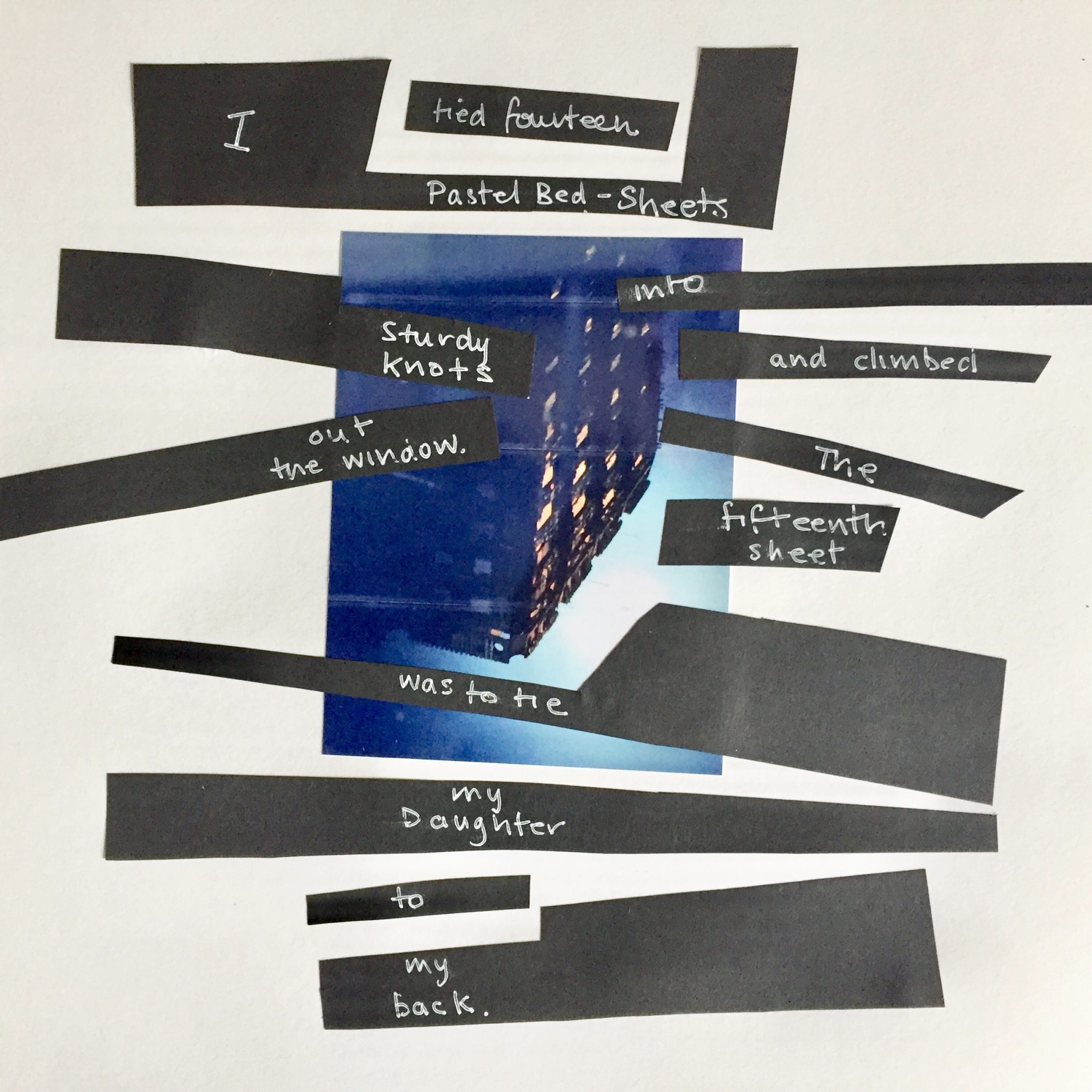 'The Fifteenth Sheet' - Survivor Testimony. Collage 2018 | 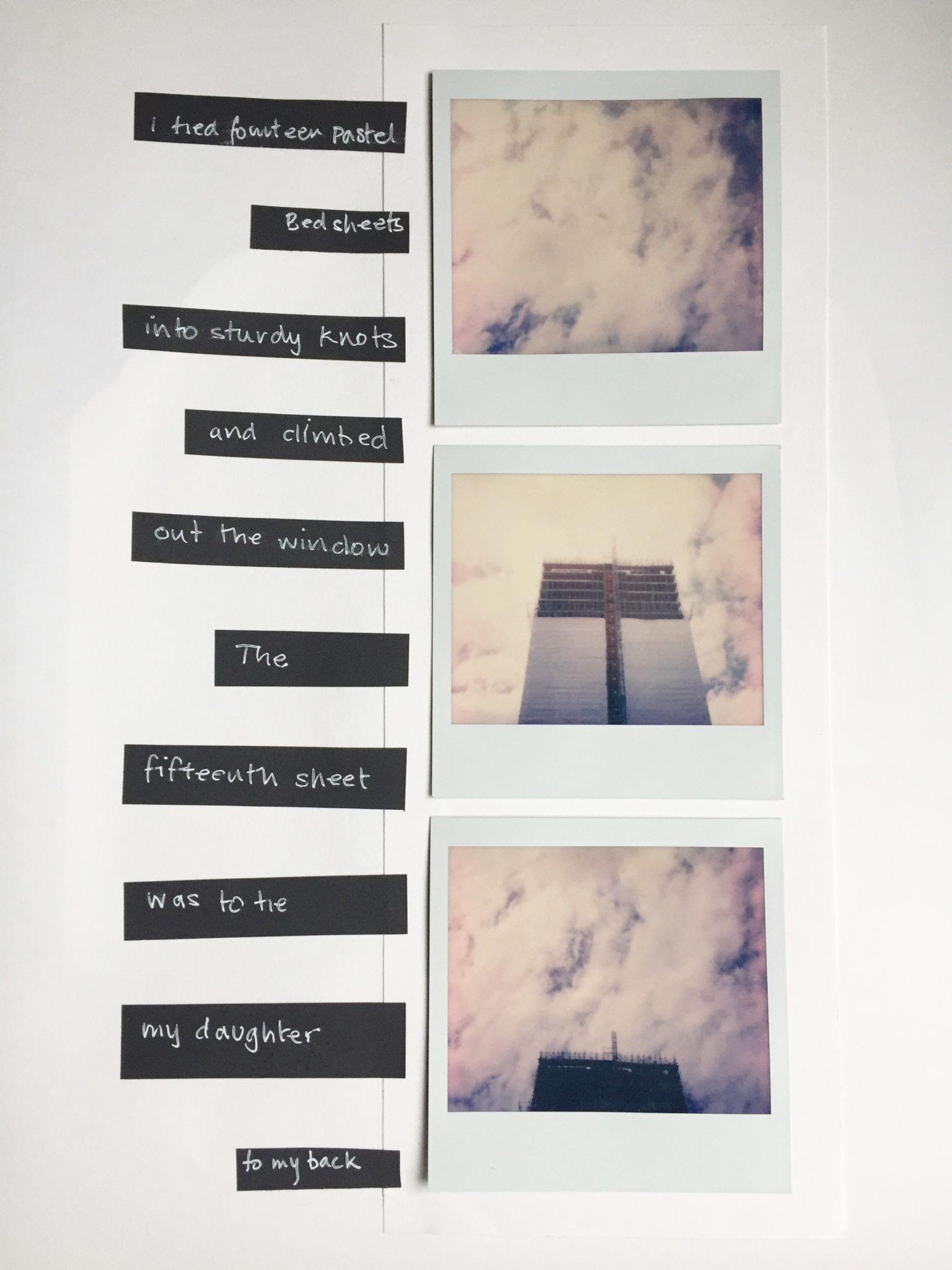 'THE FIFTEENTH SHEET' - Testimony. Collage 2018 | 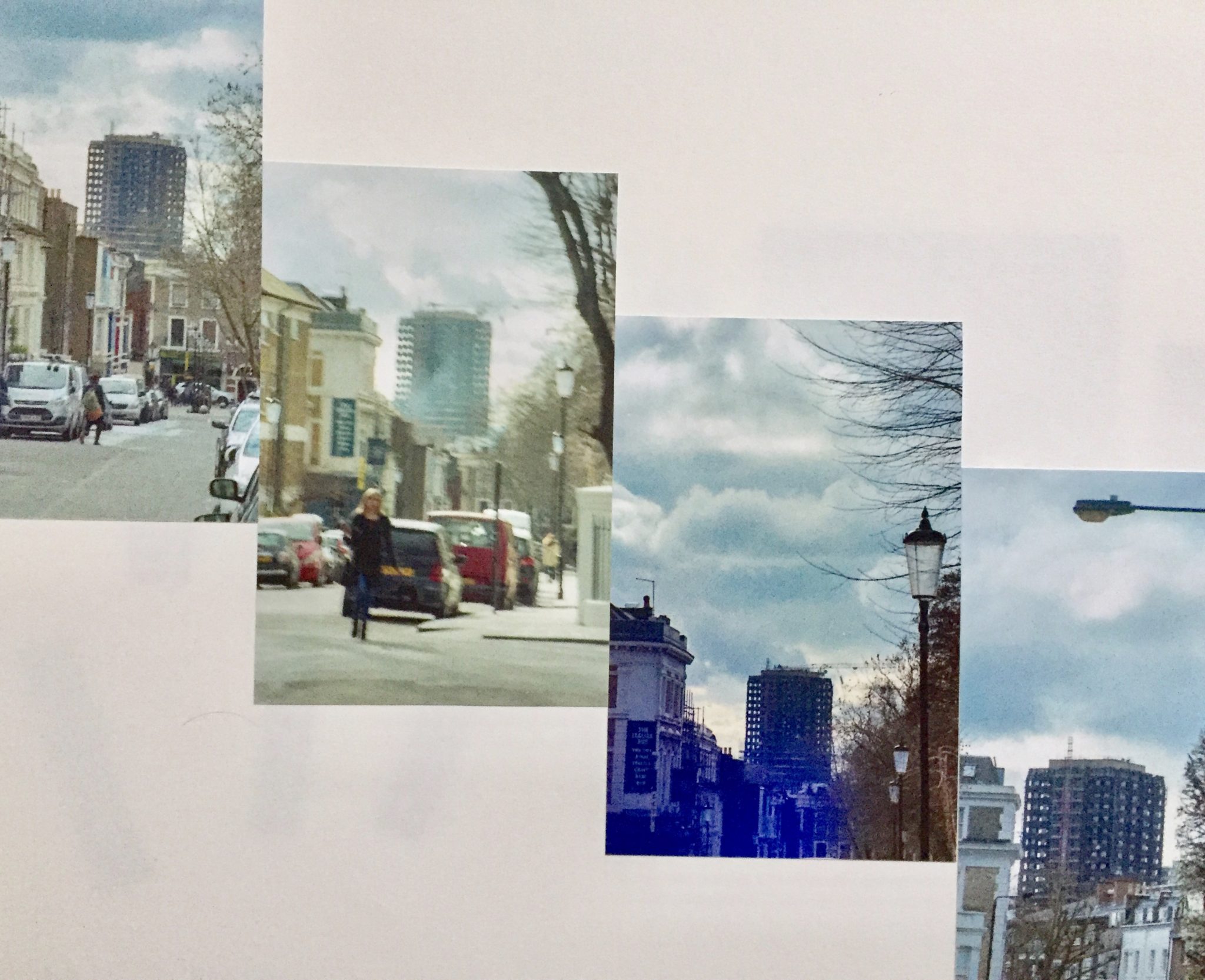 | 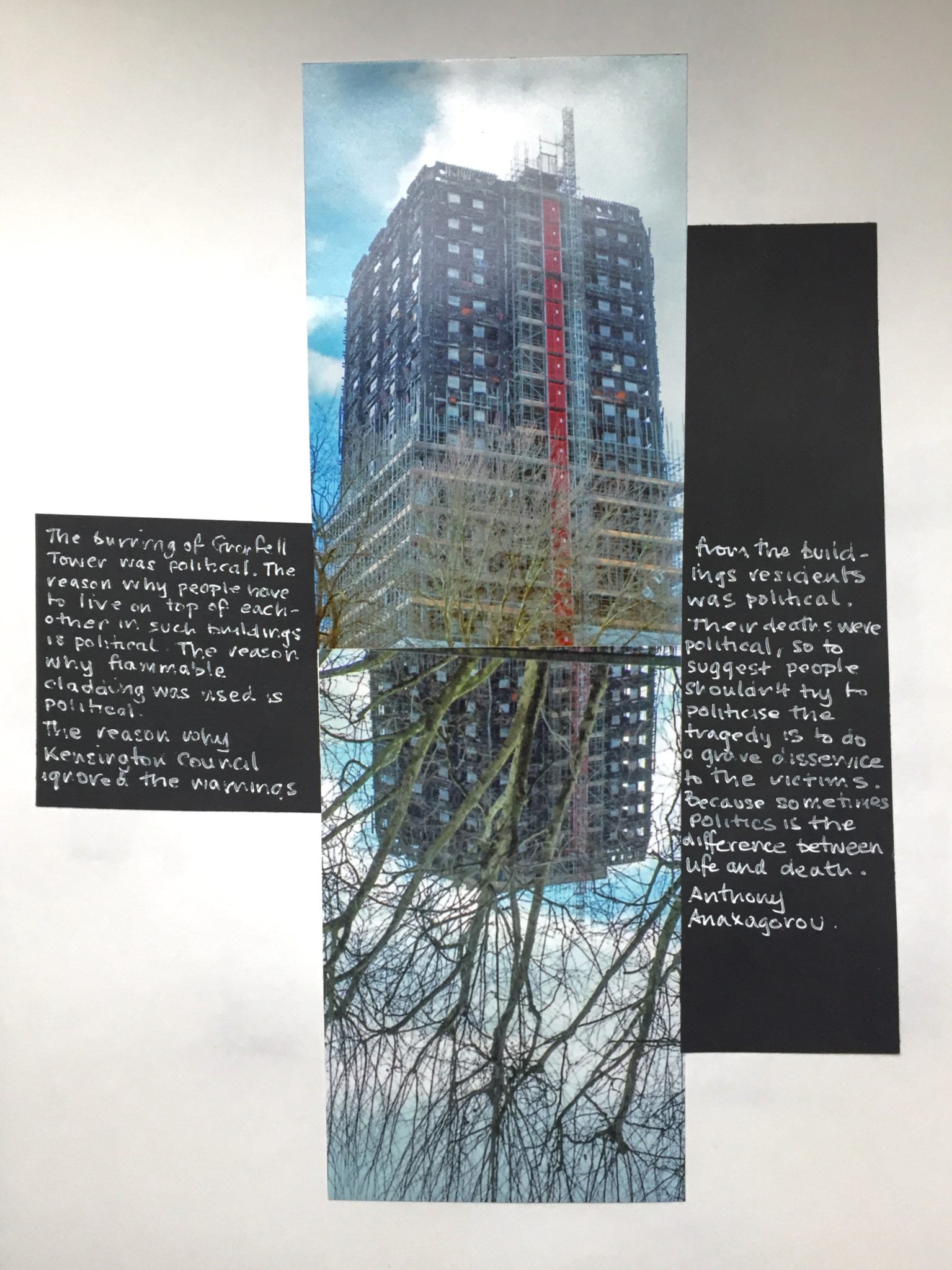 'The Burning of Grenfell Tower was Political' Collage 2018 | 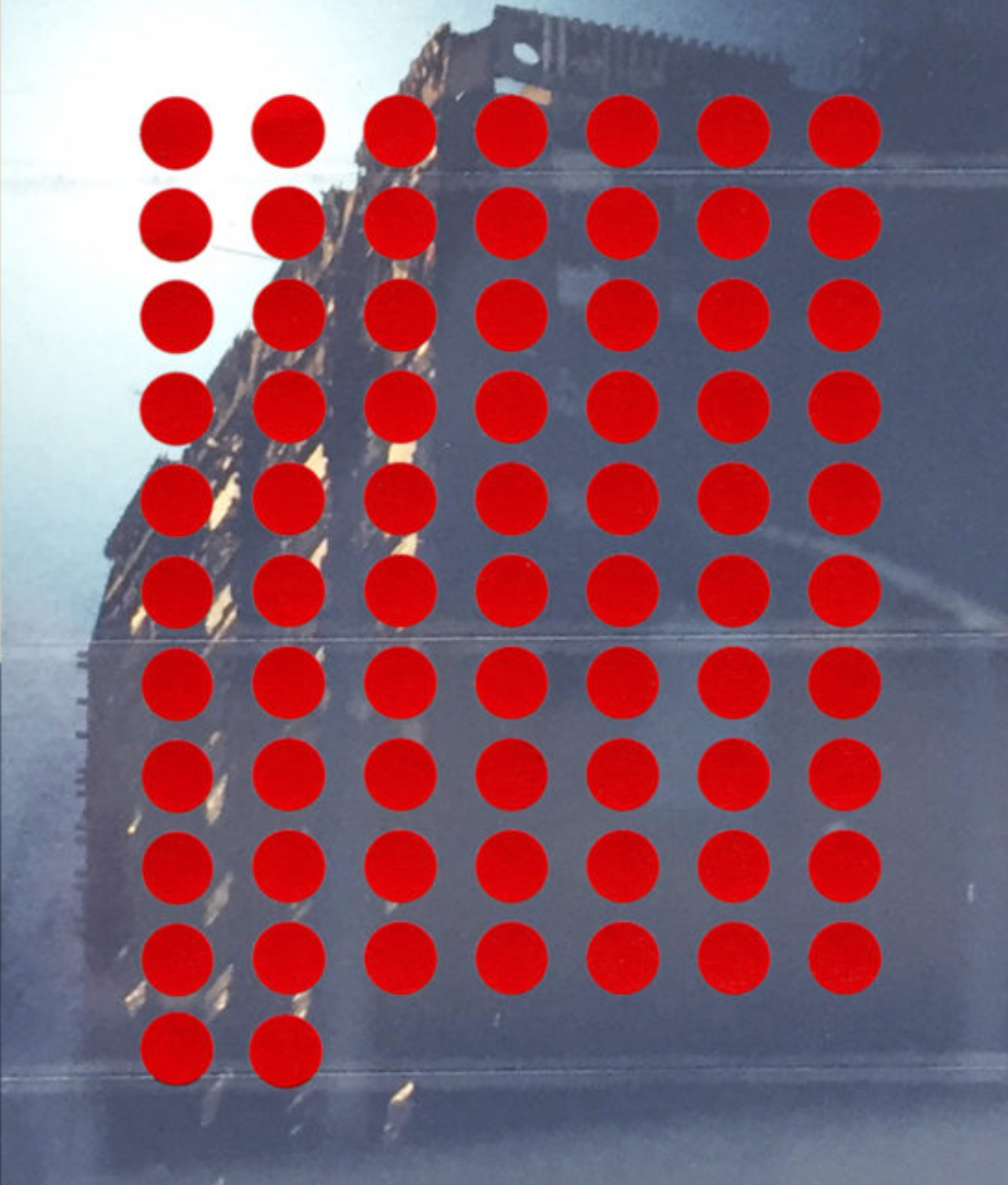 | 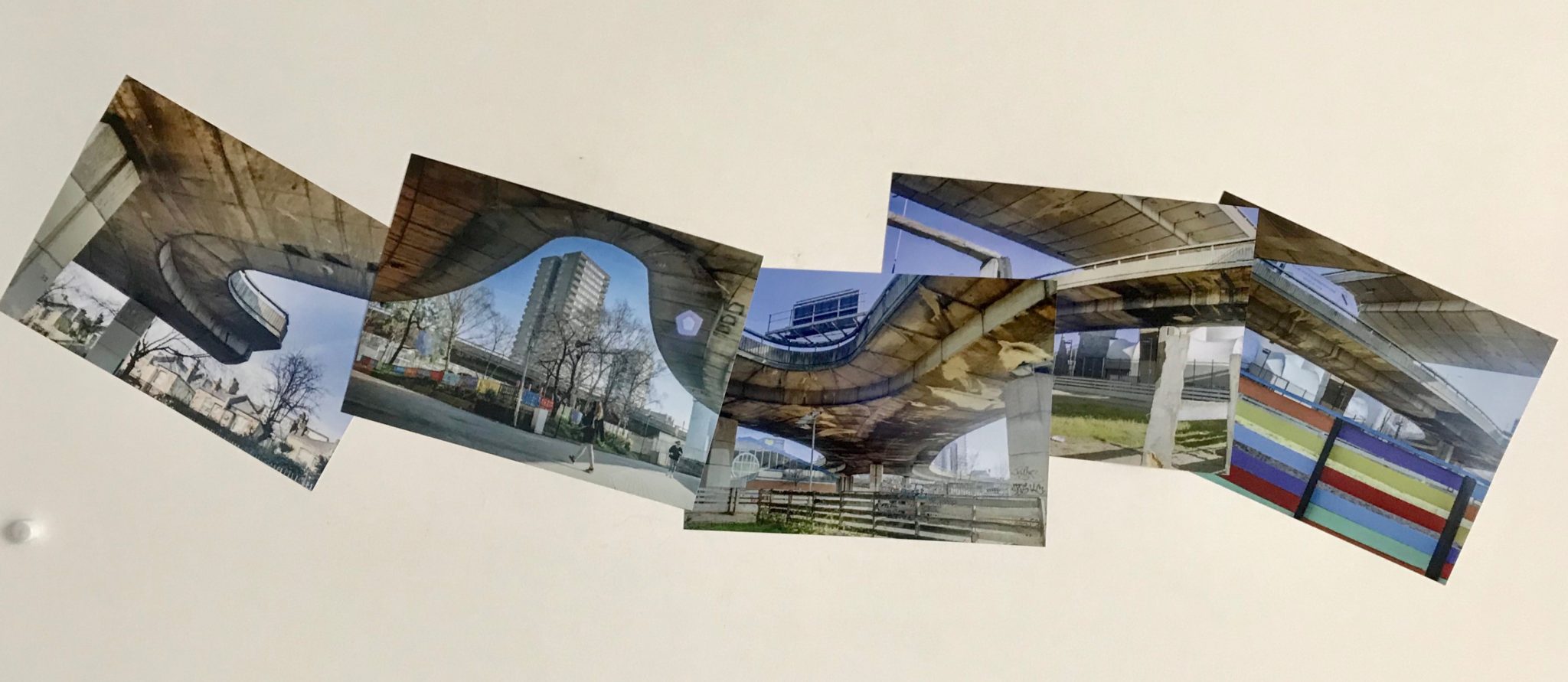 'Twisted Westway' Collage 2019 | 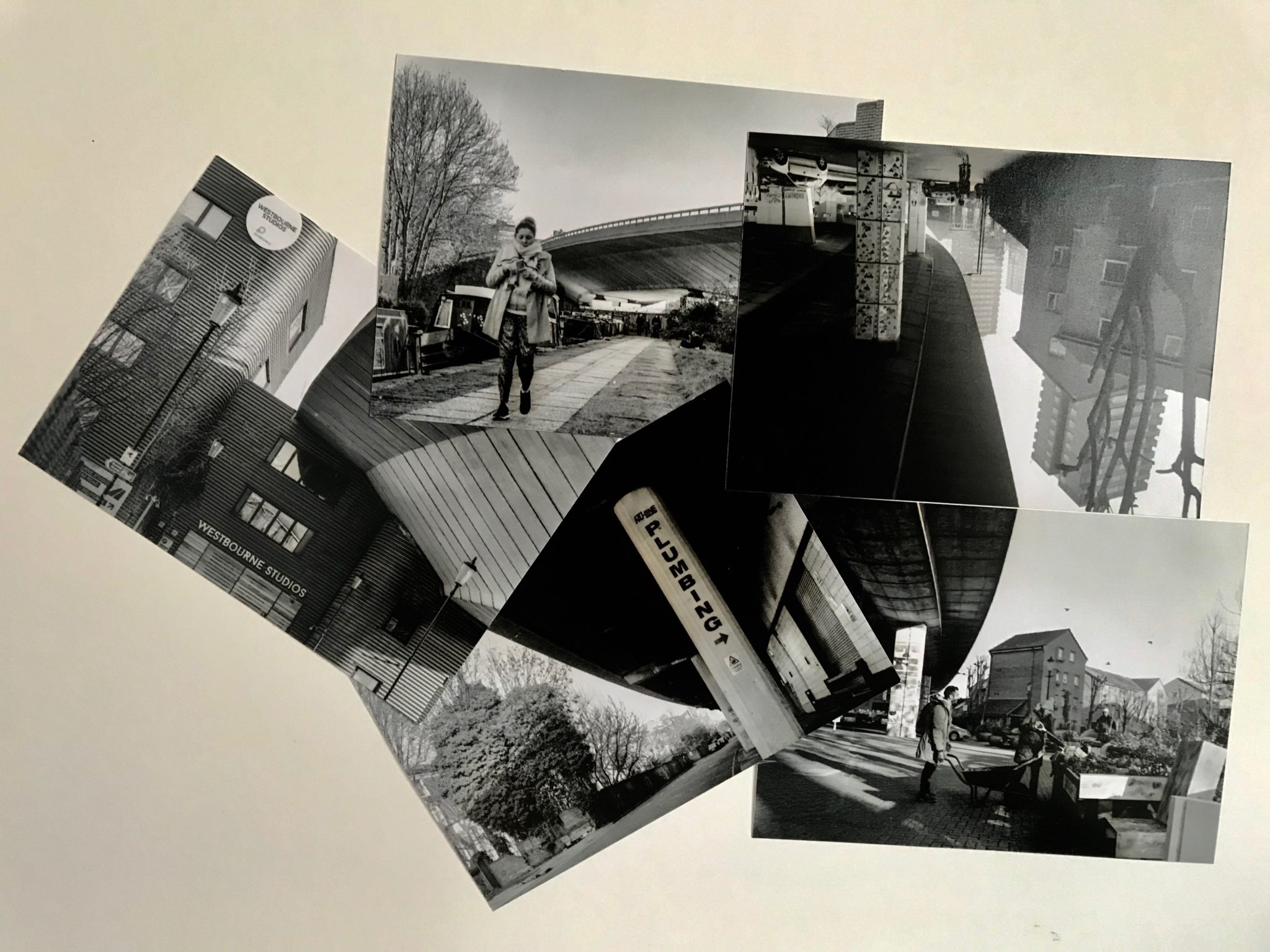 'The Westway - Ball Of Confusion 2' 2019 | 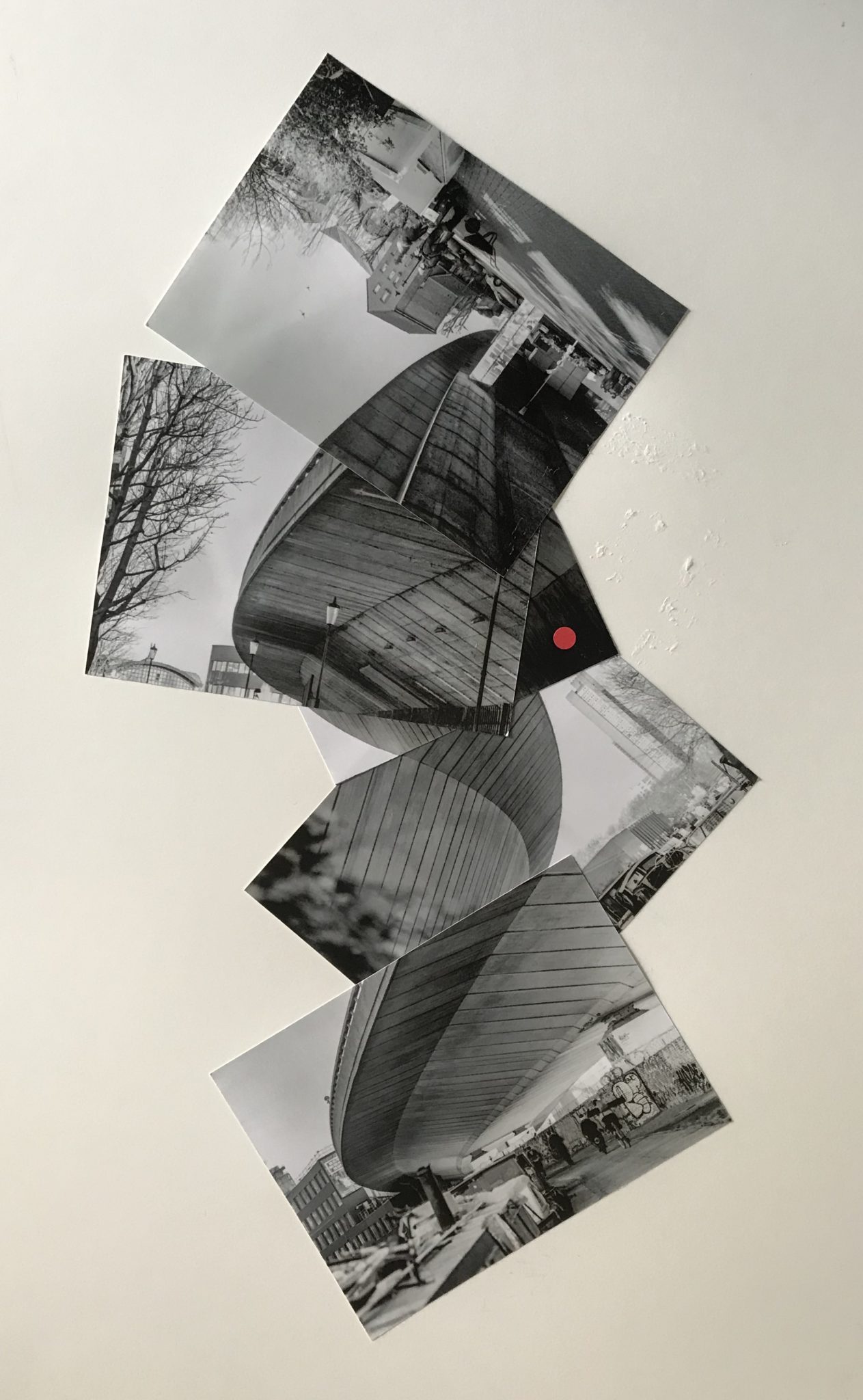 'Twisted Westway 2' Collage 2019 | 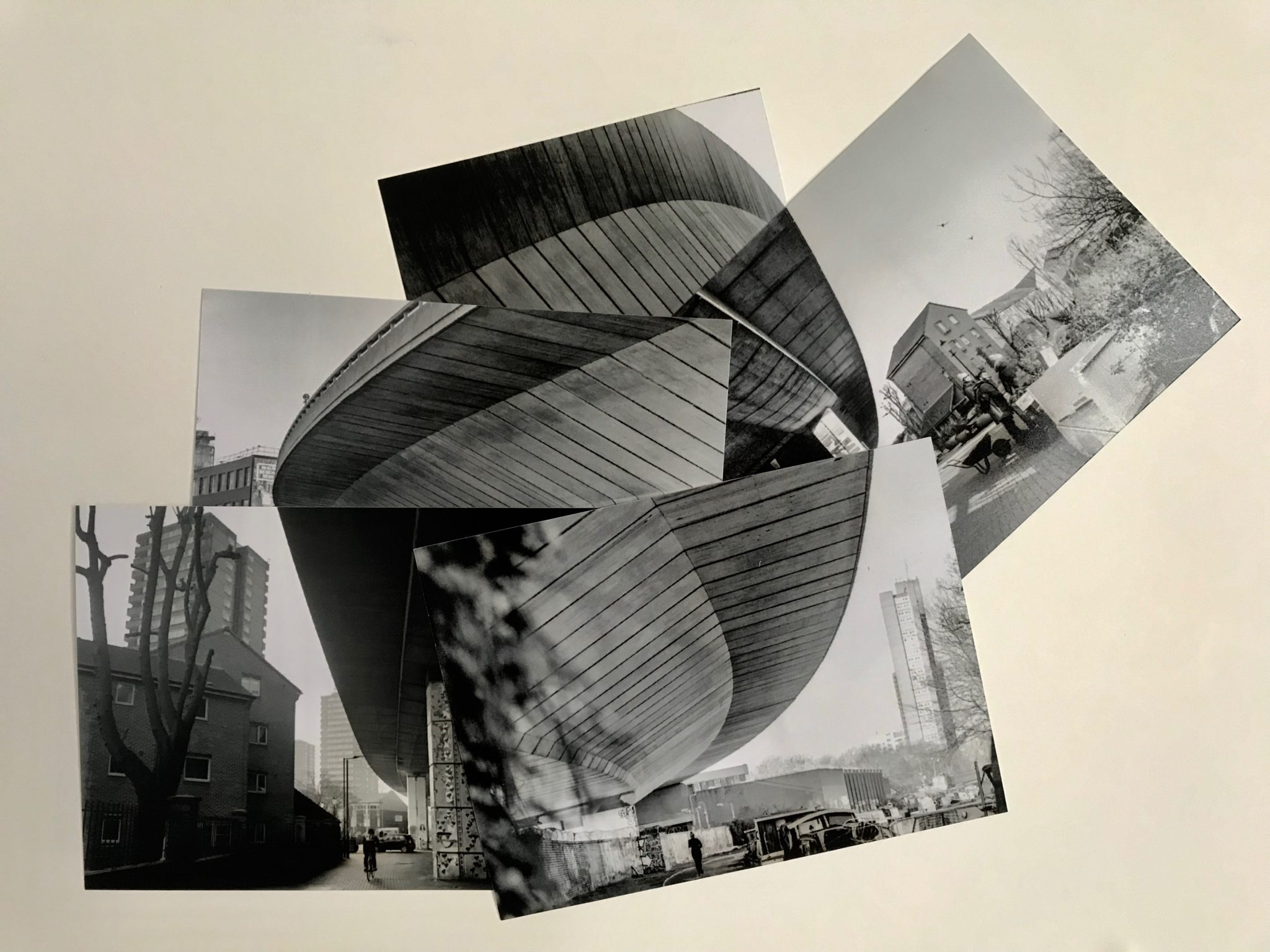 'The Westway - Ball Of Confusion 1' 2019 |
Tower of Shame
The names of the corporations, companies and council organisations involved in the doomed refurbishment of Grenfell Tower represented here in the colours of the cladding available on their sales websites. As witnesses at the first phase of the Grenfell Tower Inquiry, they were accused of a “merry-go-round of buck passing” by Richard Millett QC, leading council to the Inquiry. He said that the other corporate participants and management company Kensington and Chelsea Tenant Management Organisation (KCTMO) were engaging in an effort to shift the blame. “One finds within these detailed and carefully crafted statements no trace of any acceptance whatsoever of responsibility for what happened at Grenfell Tower,” he said.
“Any member of the public would be forced to conclude that everybody involved in the refurbishment of Grenfell Tower did what they were supposed to do and nobody made any serious or causative mistakes.”
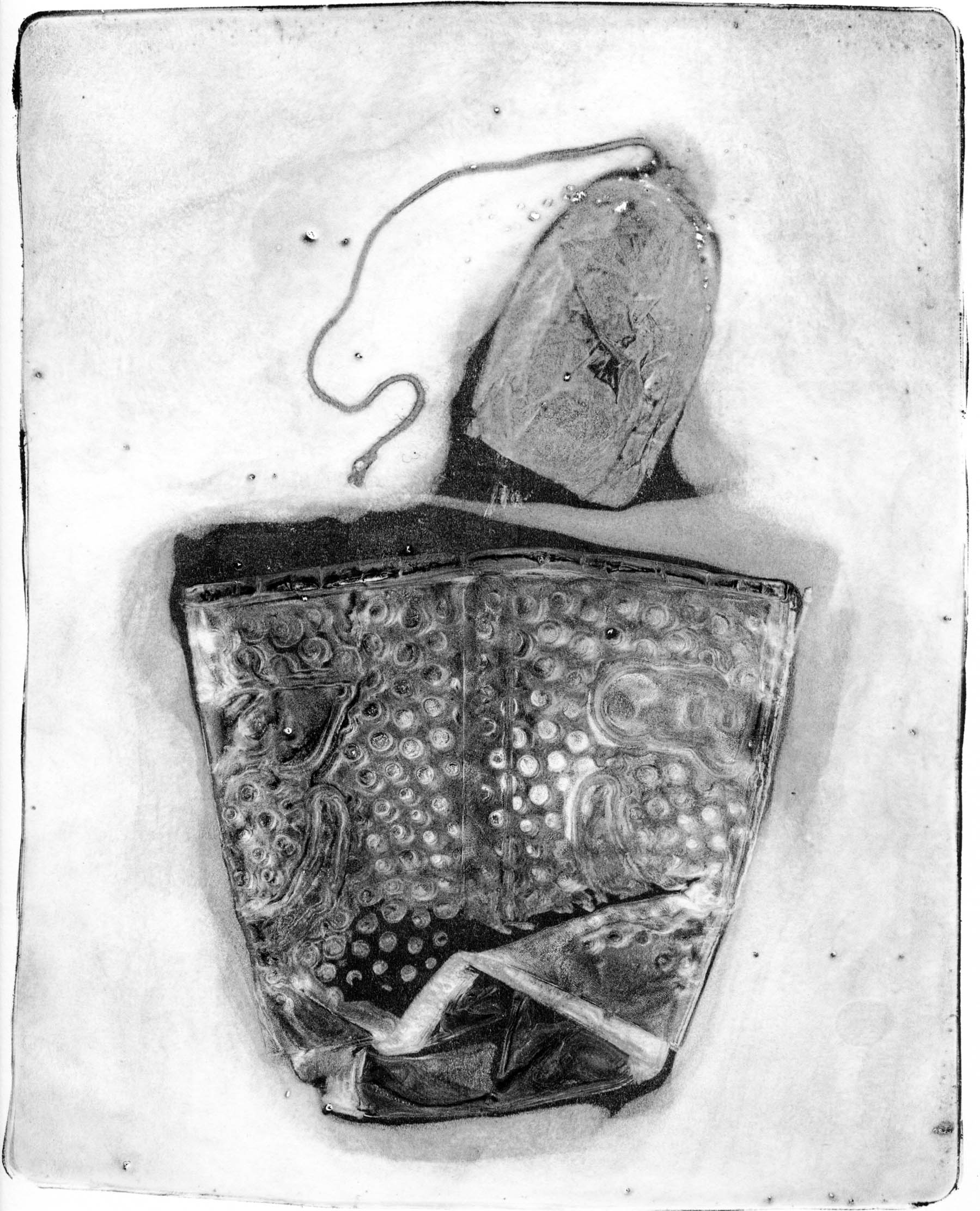 Paper Cup and Tea Bag | 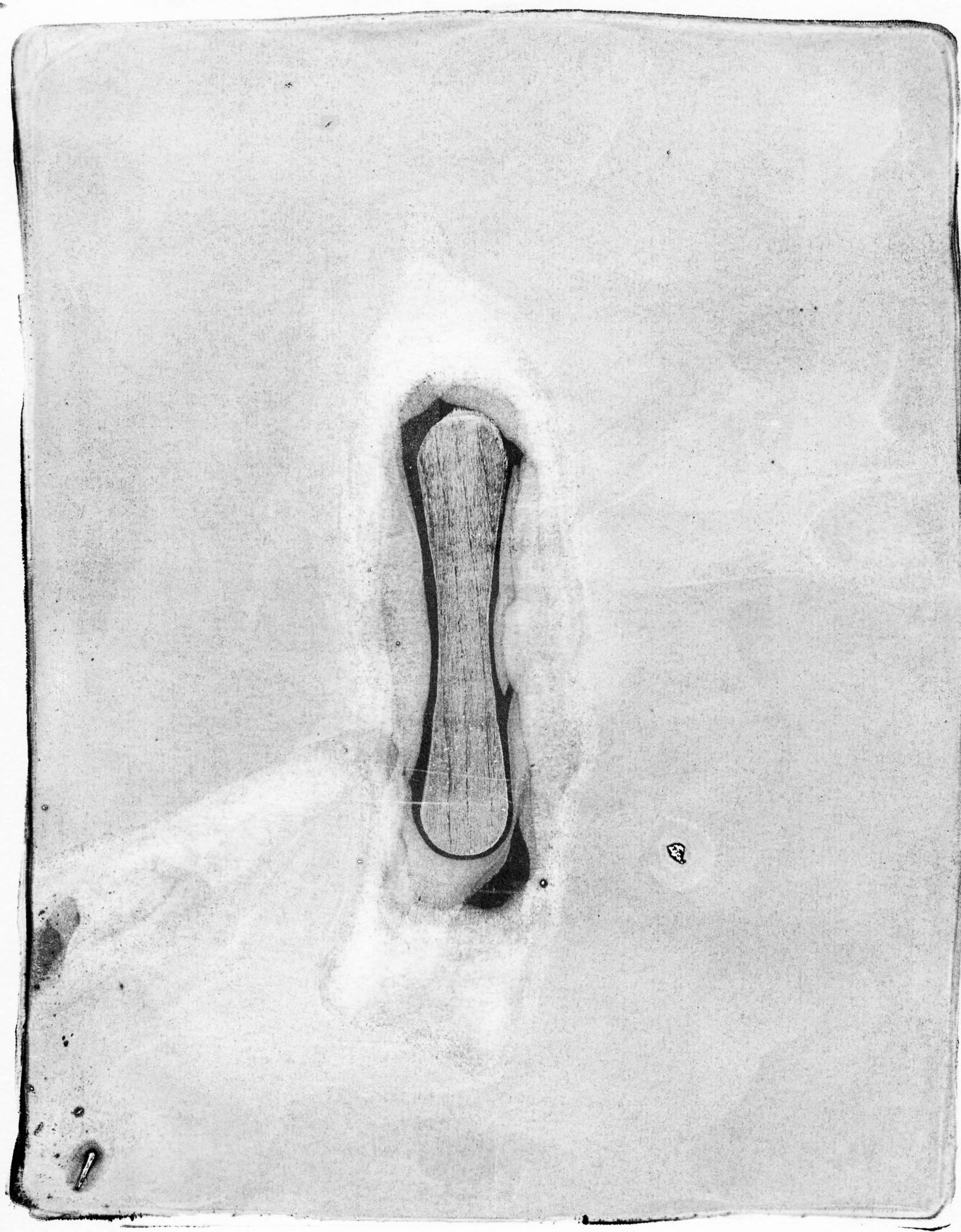 Ice Lolly Stick | 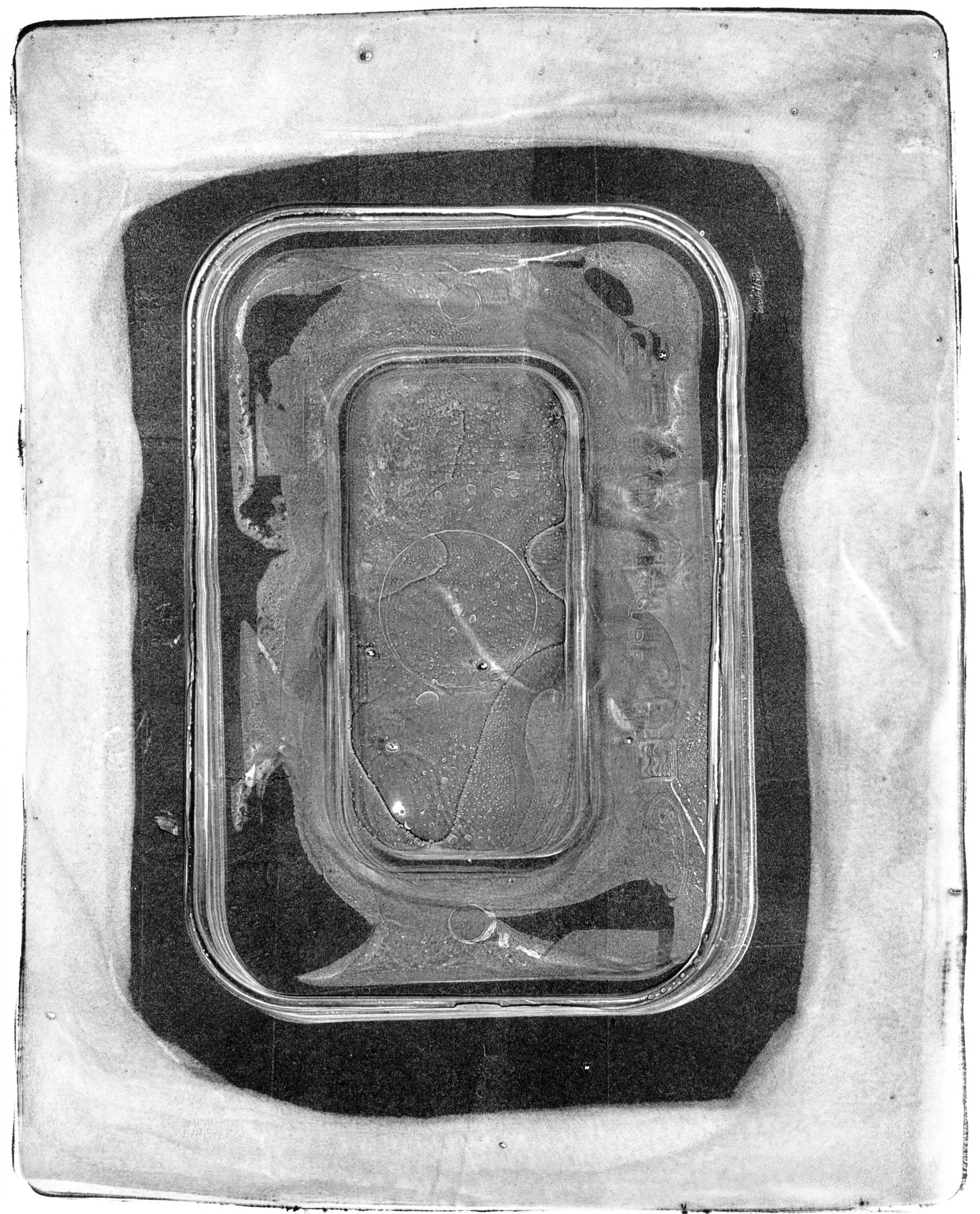 Plastic Food Container | 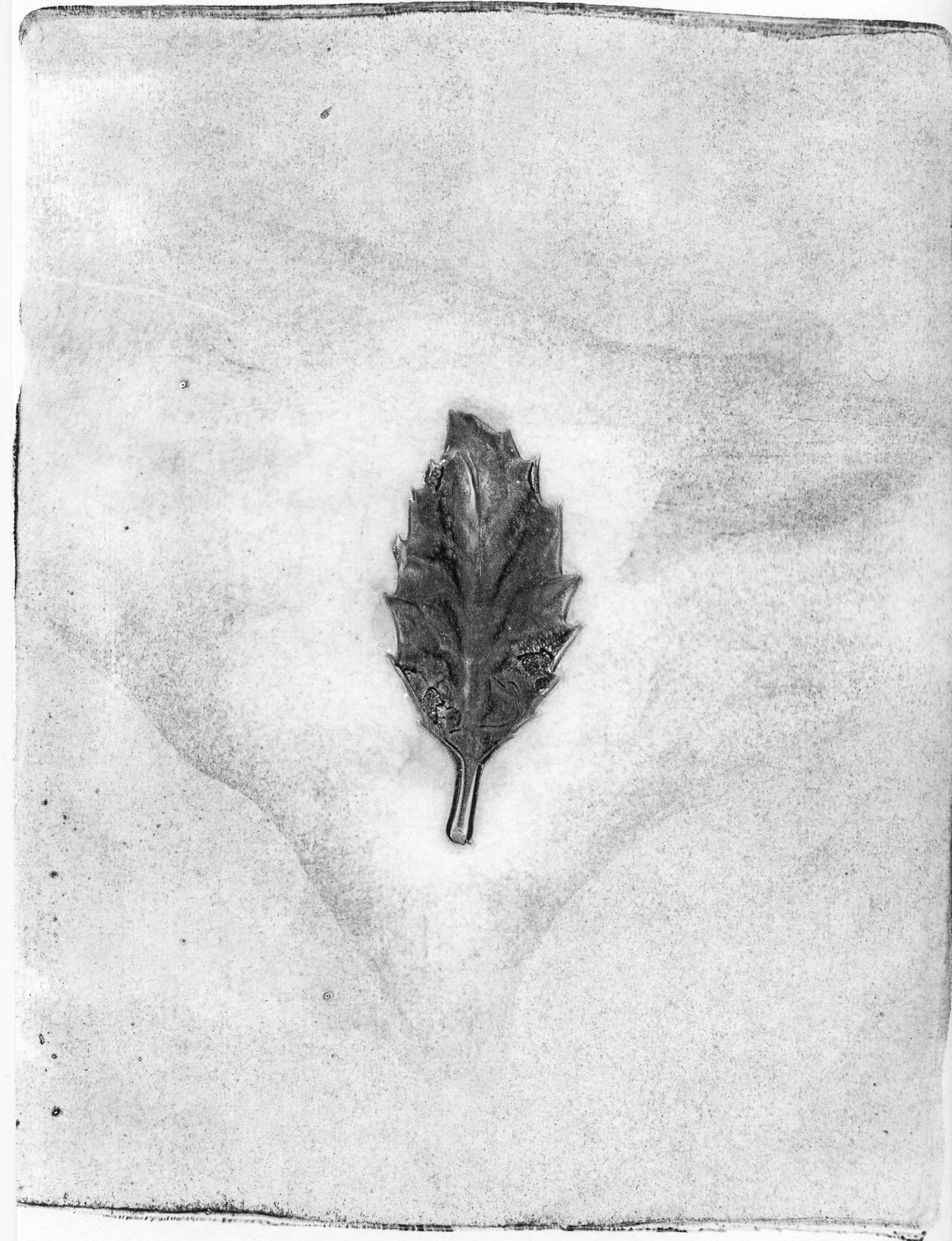 Holly Leaf | 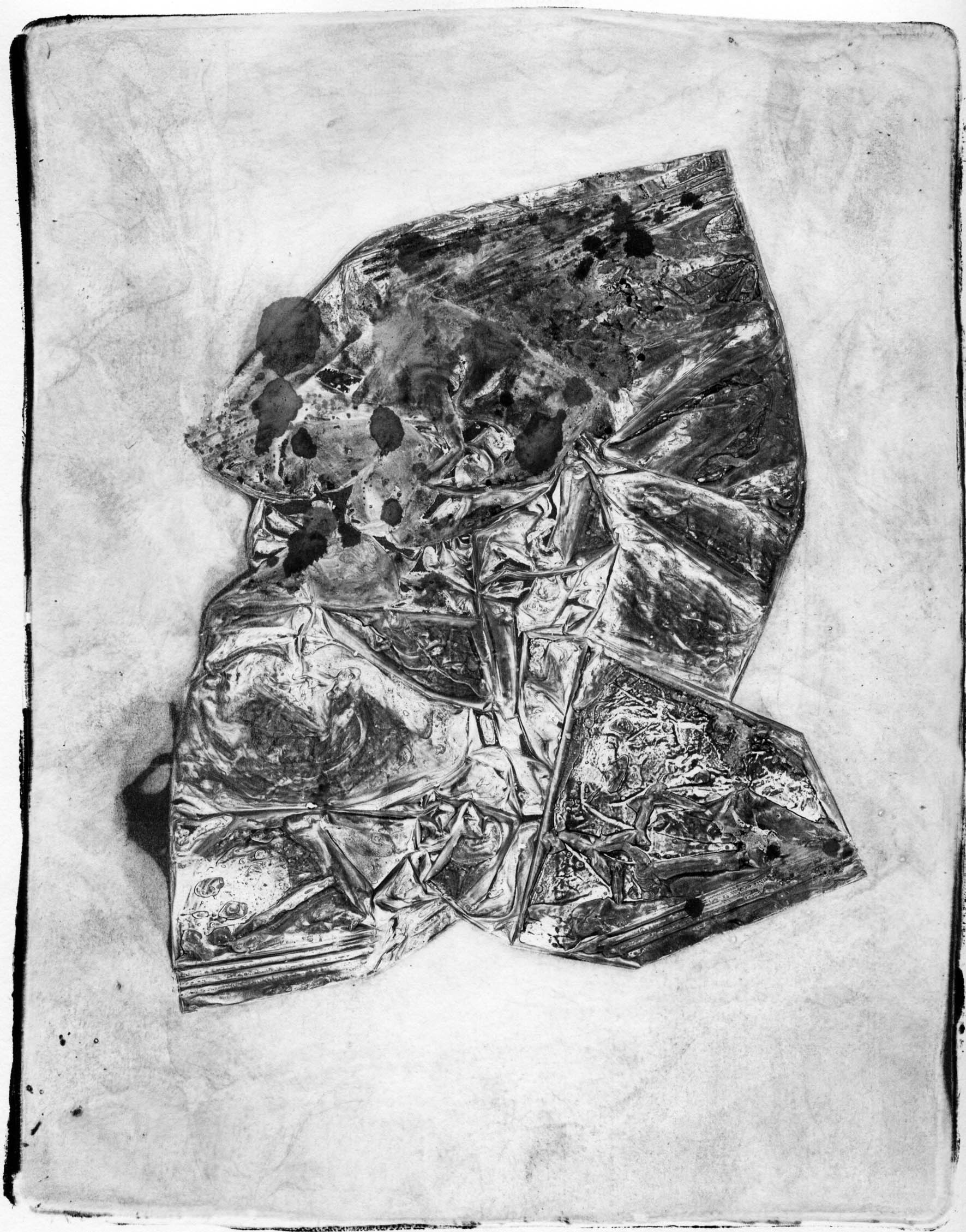 Crisp Packet | 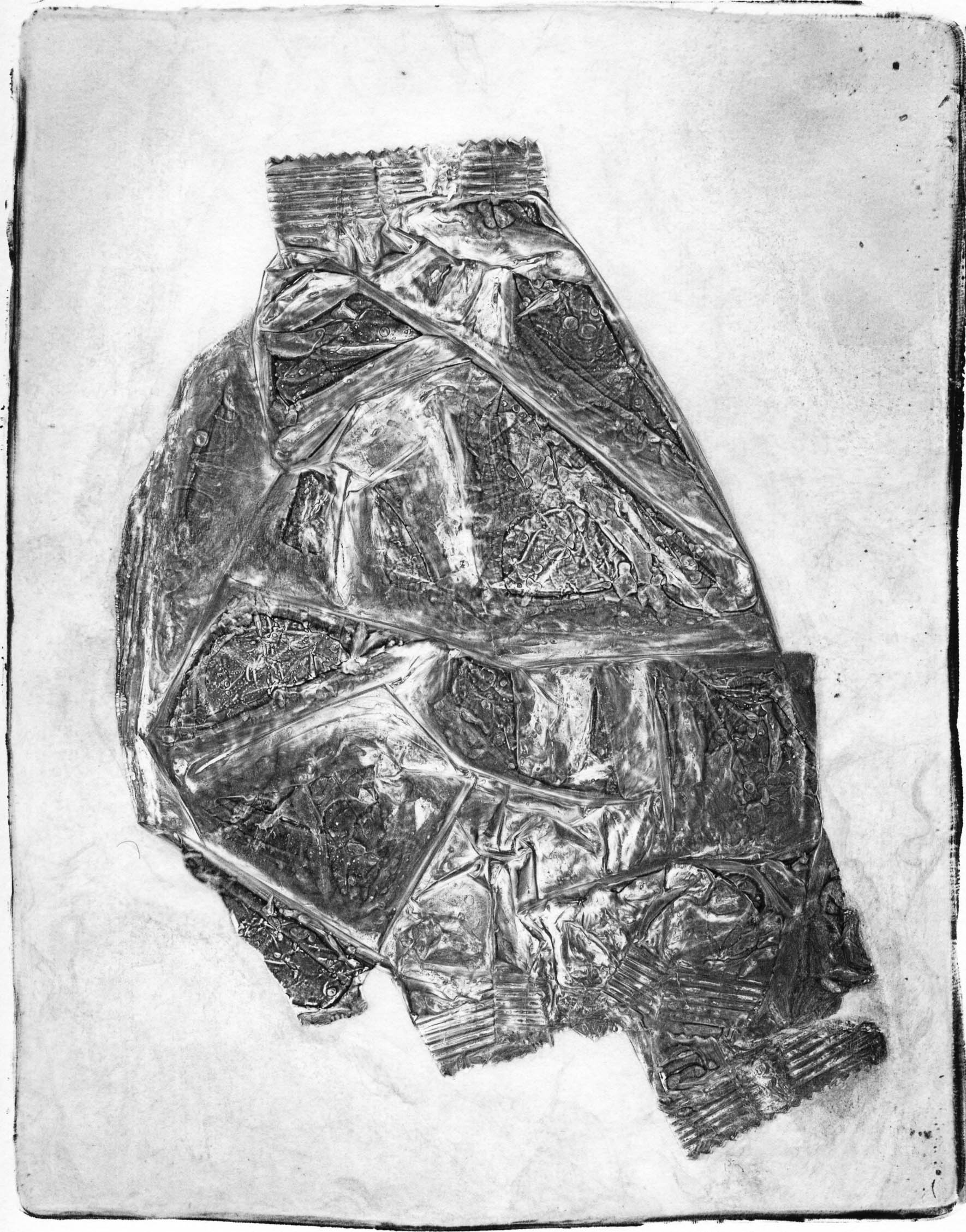 Biscuit Packet | 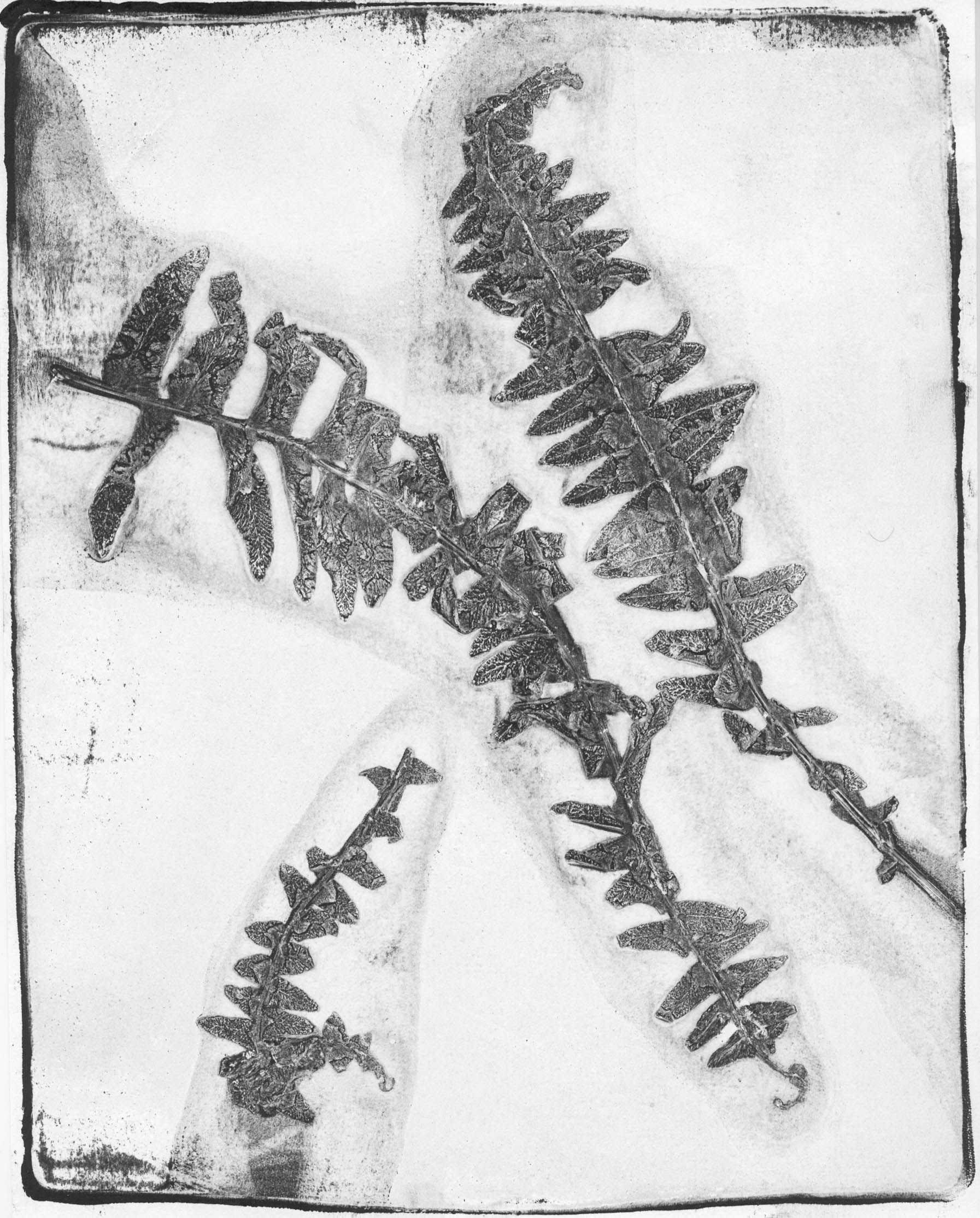 | 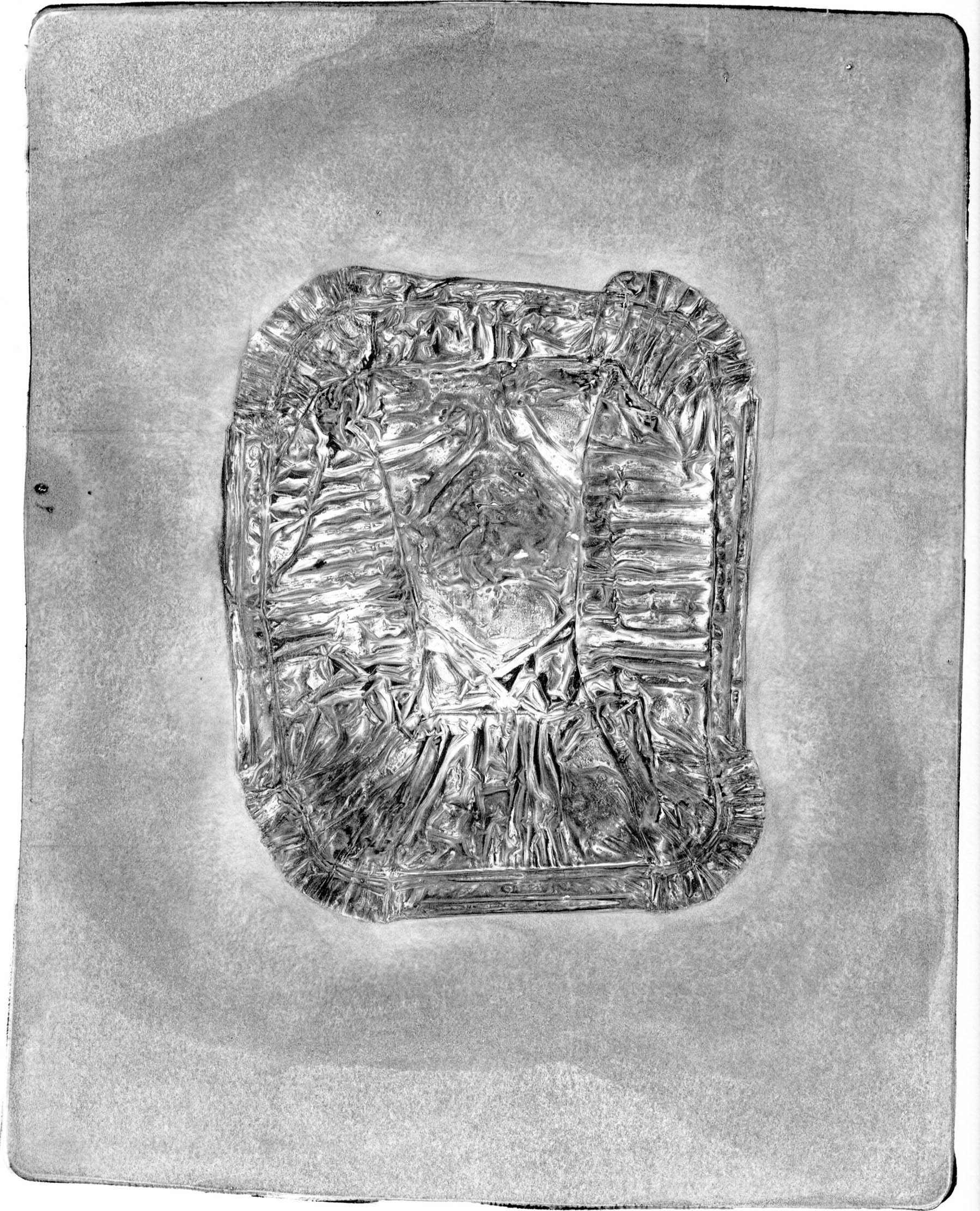 Metal Food Container 1 | 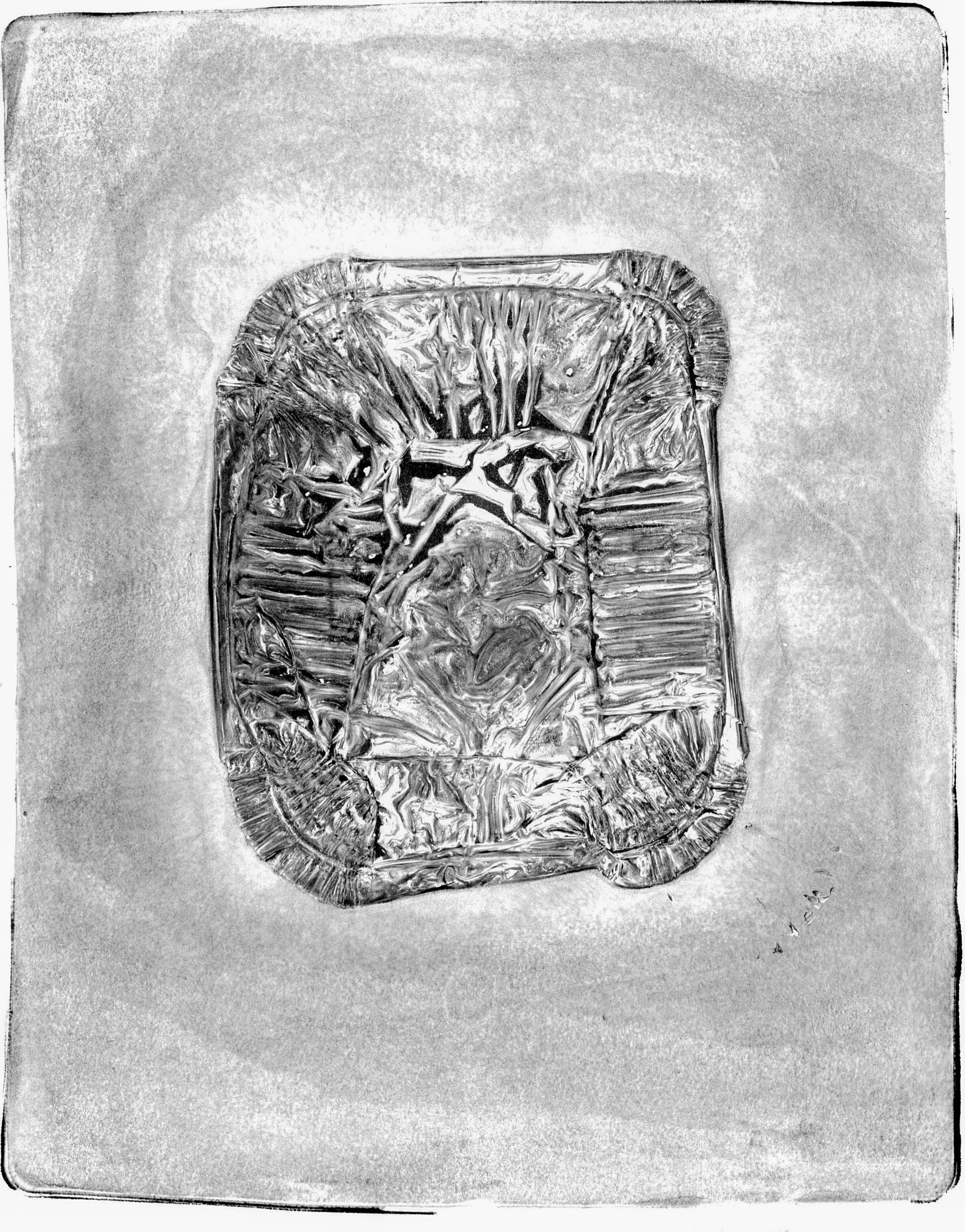 Metal Food Container 2 | 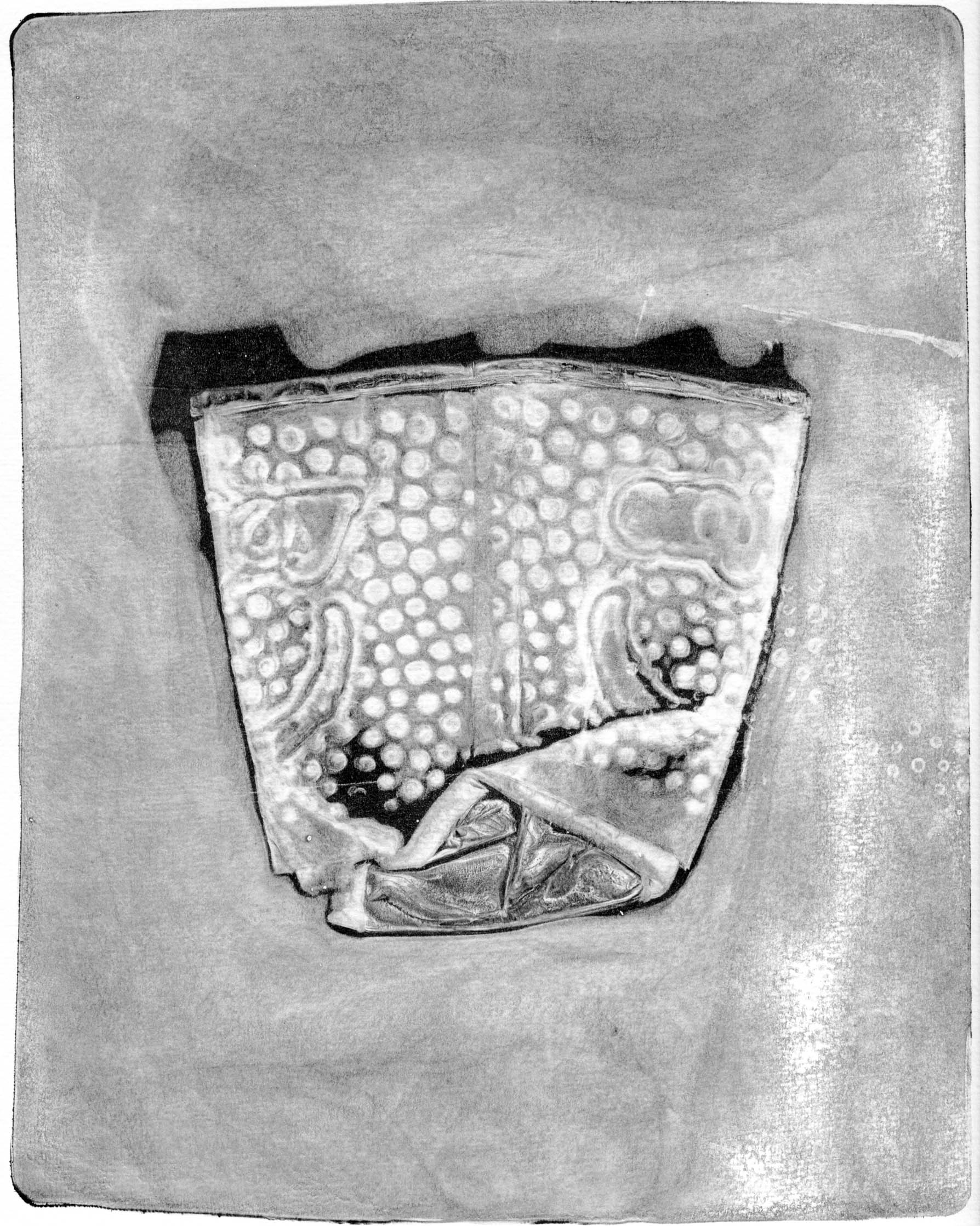 Paper Cup 1 | 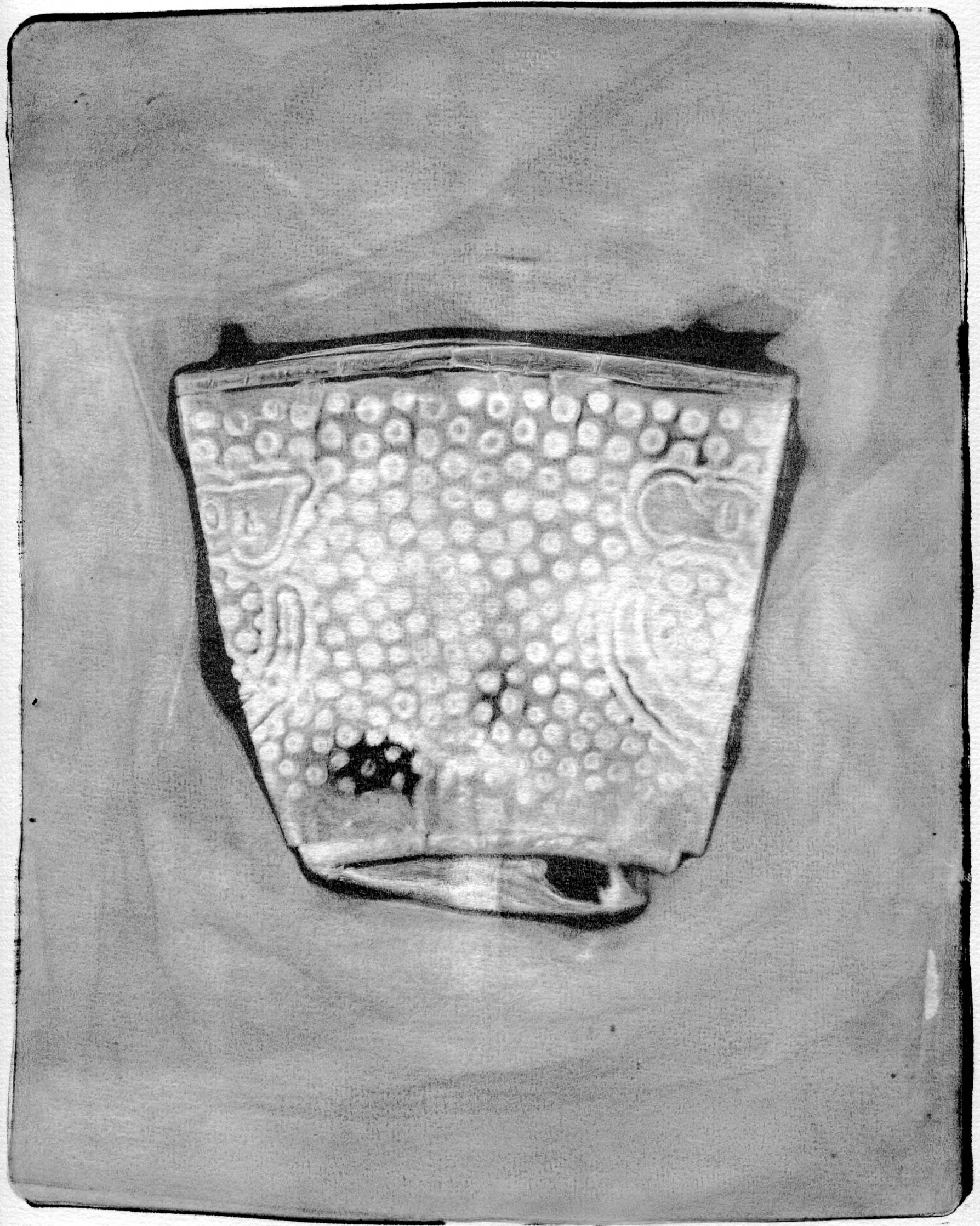 Paper Cup 2 | 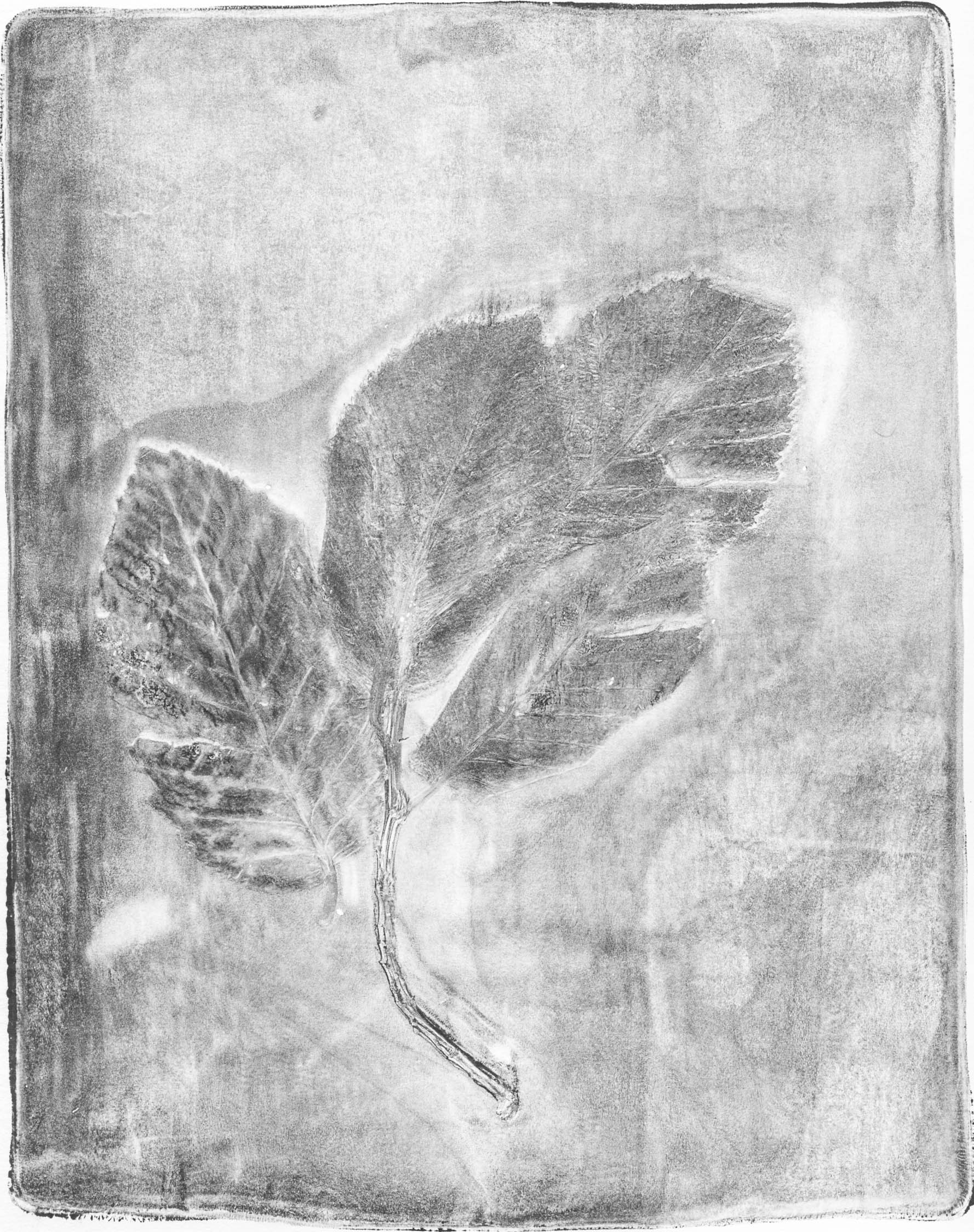 Leaves | 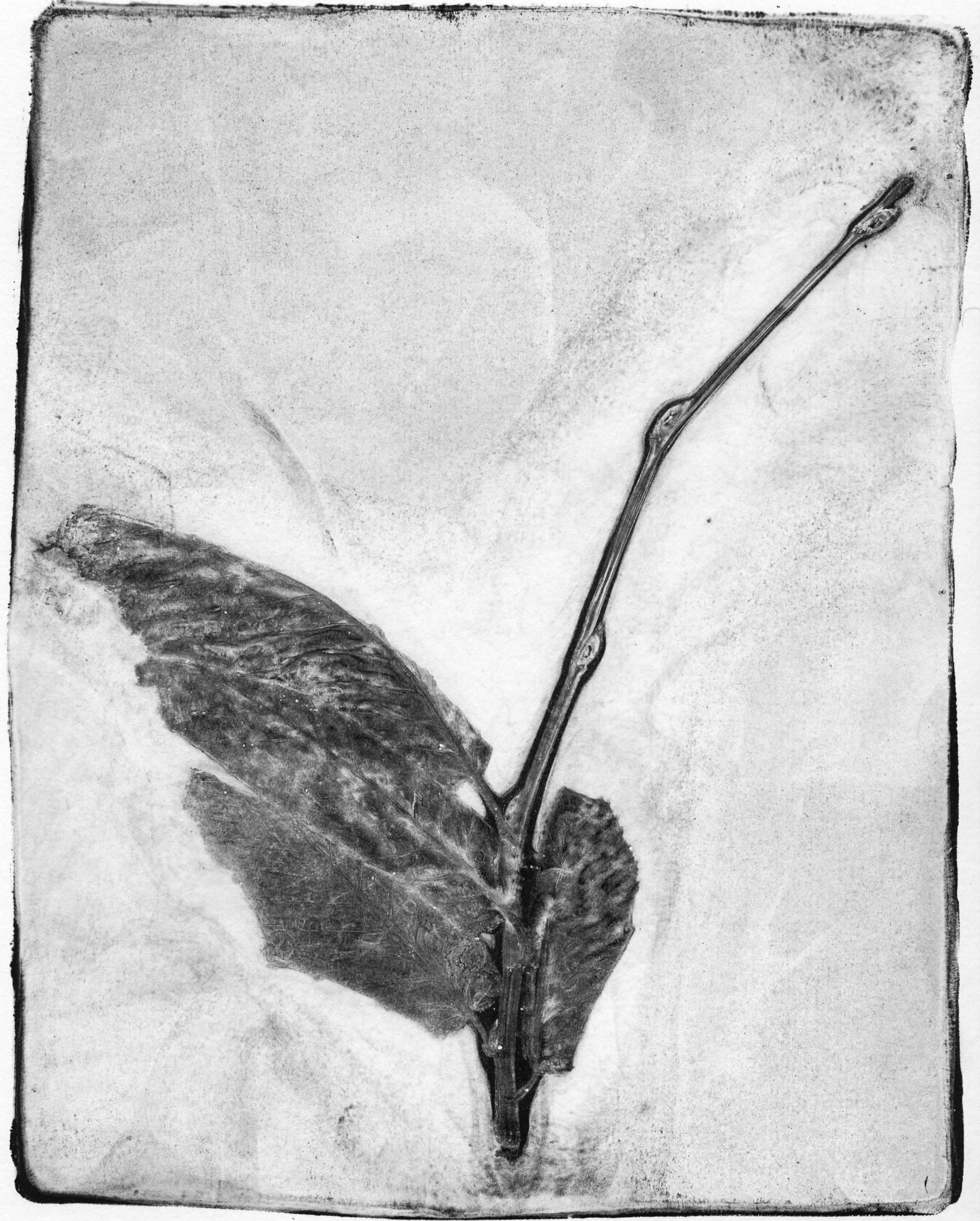 Dead Leaf | 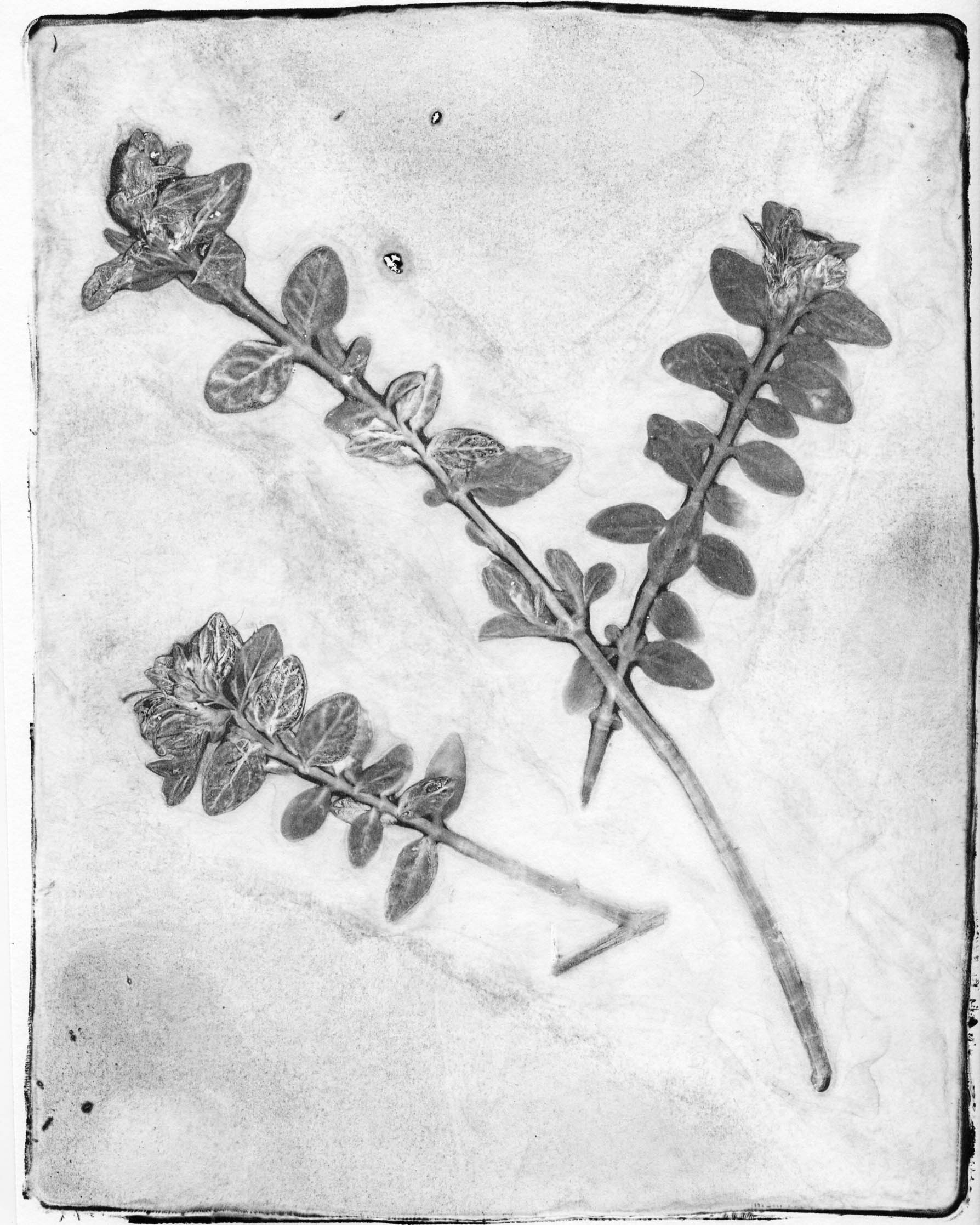 | 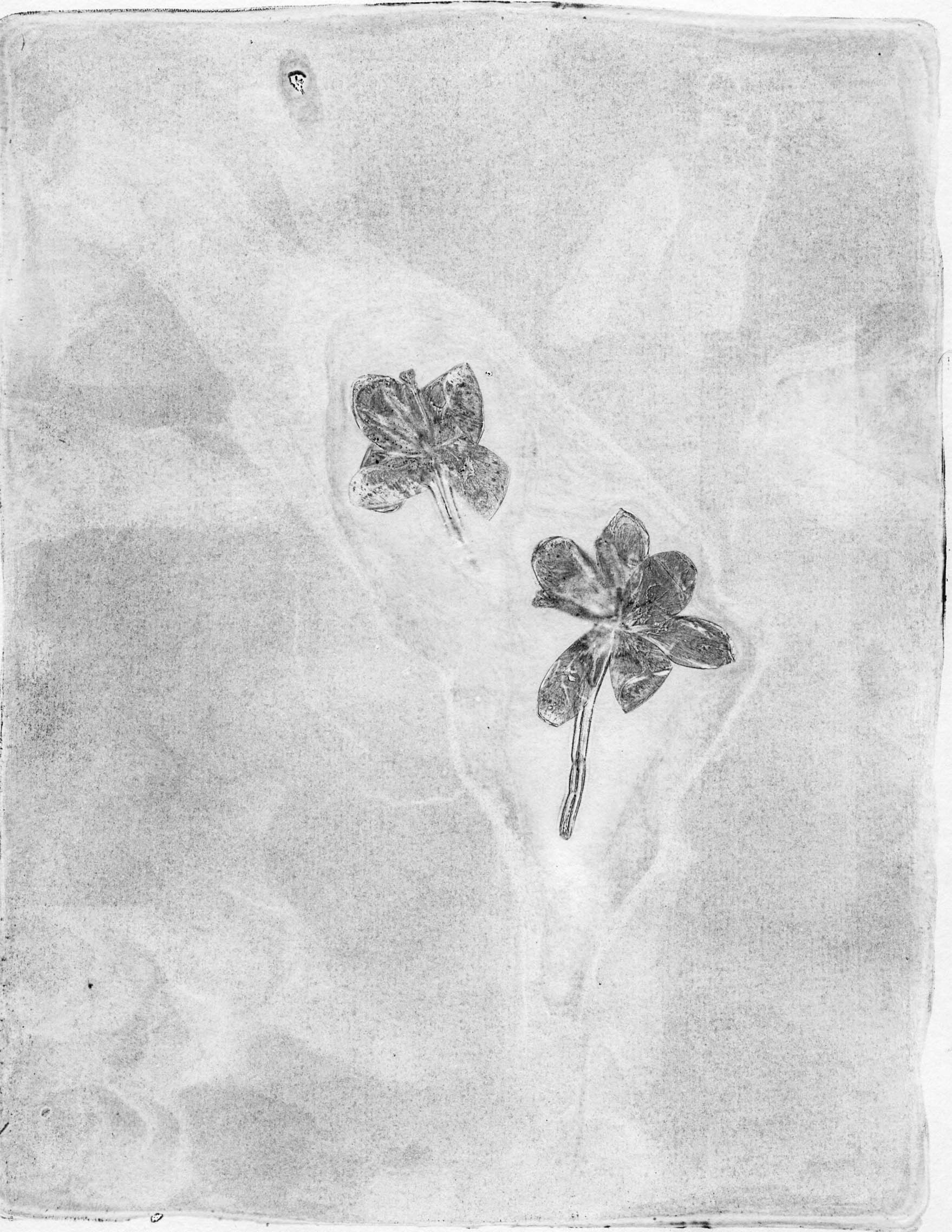 Spring Flowers | 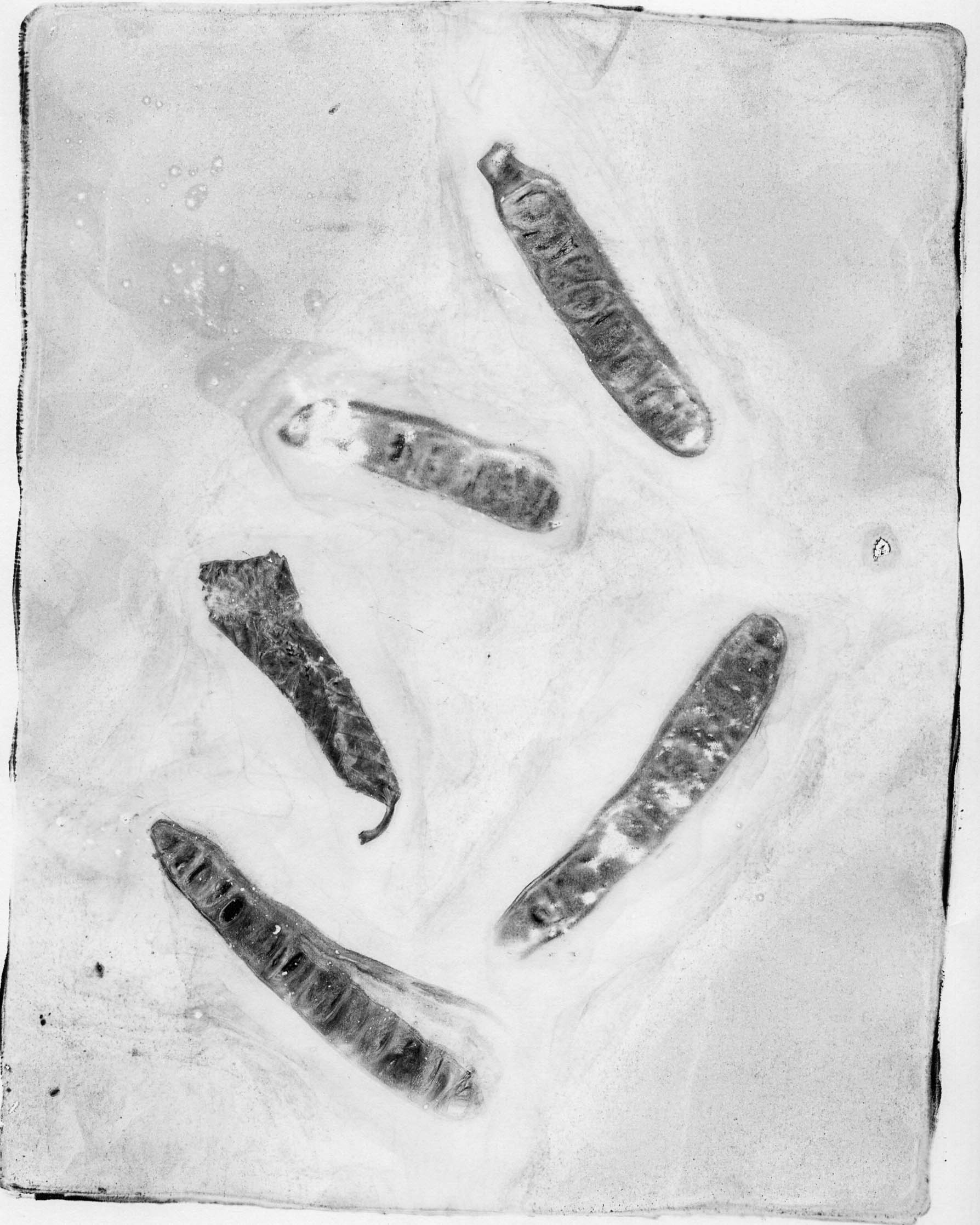 Sycamore Seeds | 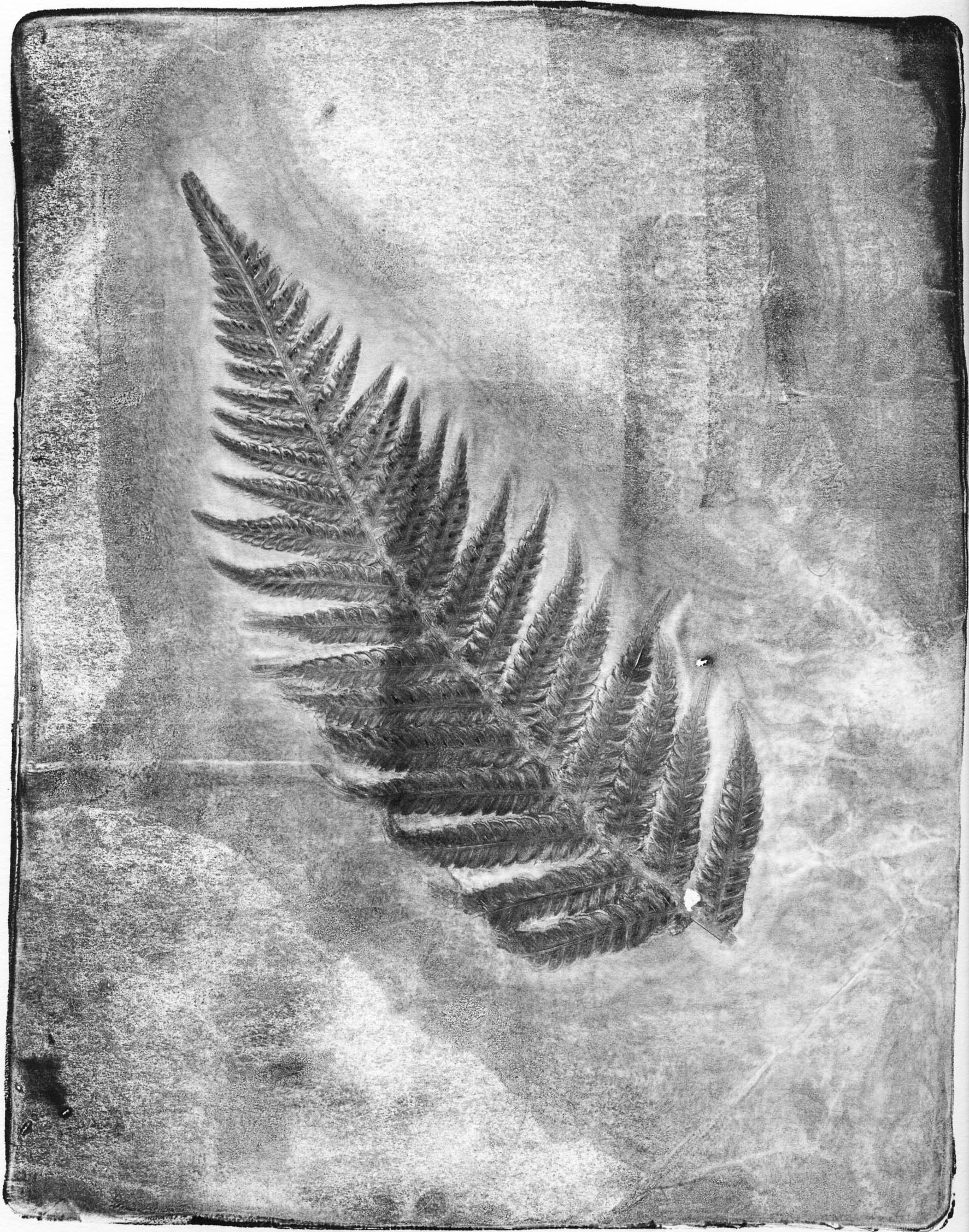 Fern Leaf |
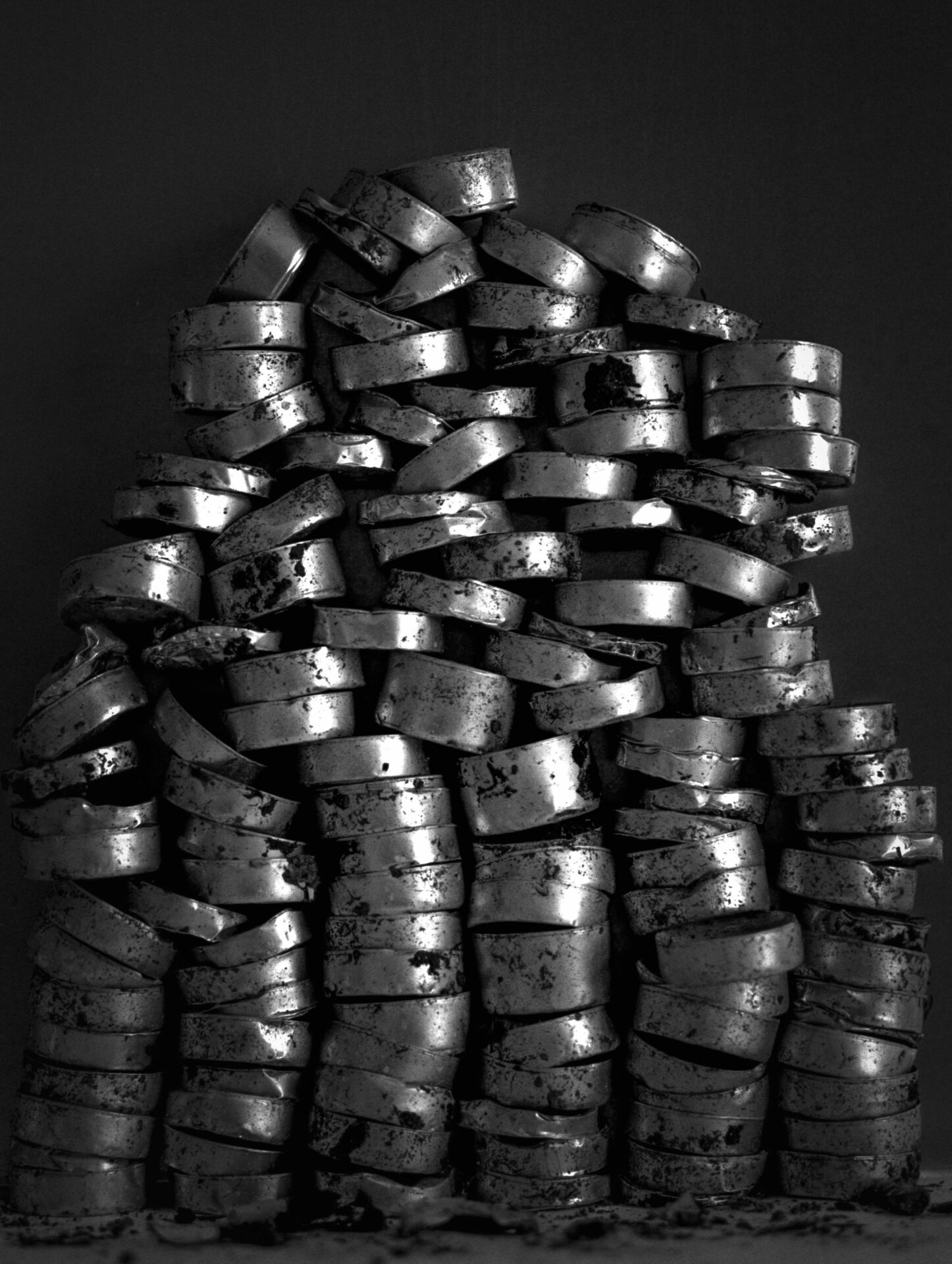
GRENFELL - STREETS